





What's Happening?
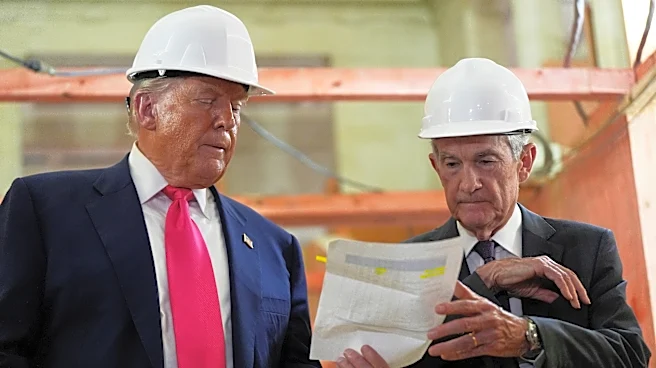
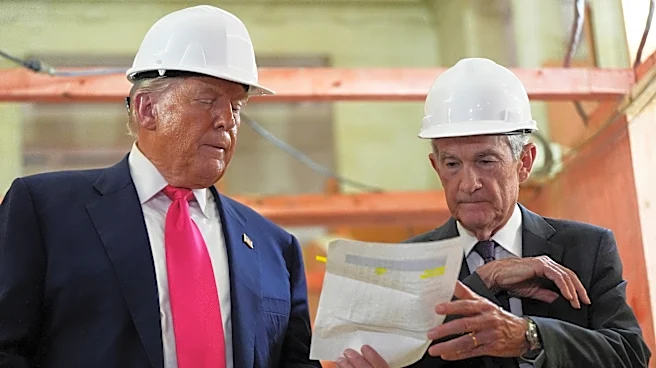
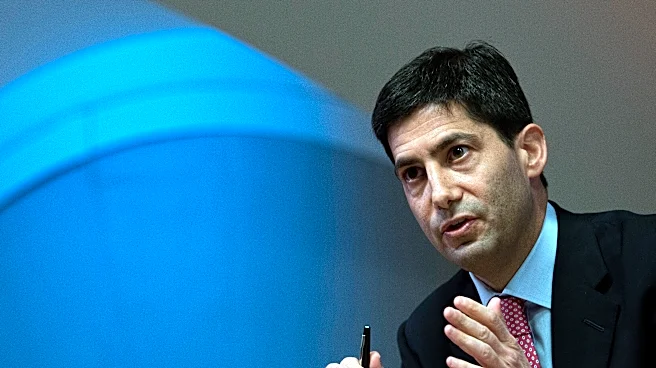
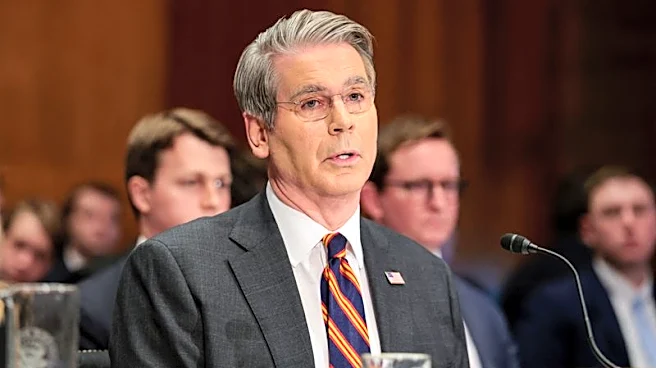
Senator Thom Tillis of North Carolina has announced his intention to block the nomination of Kevin Warsh, President Trump's choice to replace Federal Reserve Chair Jerome Powell, until the Department of Justice ends its investigation into Powell. Tillis,
who is retiring, stated in an interview with NBC News that he would not support Warsh's confirmation unless the Trump administration ceases the criminal probe into Powell. Warsh's confirmation hearing is scheduled for next week, but his nomination is unlikely to proceed without Tillis' vote, especially if all Democrats oppose Trump's nominee. Tillis acknowledged Trump's claims of non-involvement in the investigation, despite Trump's previous criticisms of Powell, suggesting that the DOJ might be acting to gain favor with the White House.
Why It's Important?
The decision by Senator Tillis to block Warsh's nomination has significant implications for the Federal Reserve's leadership and U.S. monetary policy. Jerome Powell's term as chair expires in May, and the delay in confirming a successor could impact the stability and direction of the Federal Reserve during a critical period for the U.S. economy. The ongoing investigation into Powell adds a layer of political tension, potentially affecting the independence of the Federal Reserve. Tillis' stance highlights the intersection of politics and monetary policy, with potential consequences for economic stakeholders who rely on the Federal Reserve's decisions to guide financial markets and economic growth.
What's Next?
The confirmation hearing for Kevin Warsh is set for next week, but without Tillis' support, the nomination may stall. The situation could lead to increased political maneuvering as the Trump administration seeks to resolve the DOJ investigation into Powell. If the investigation continues, it may further complicate the nomination process and delay the appointment of a new Federal Reserve chair. Political leaders and economic stakeholders will be closely monitoring developments, as the outcome could influence monetary policy and economic stability.