








What's Happening?
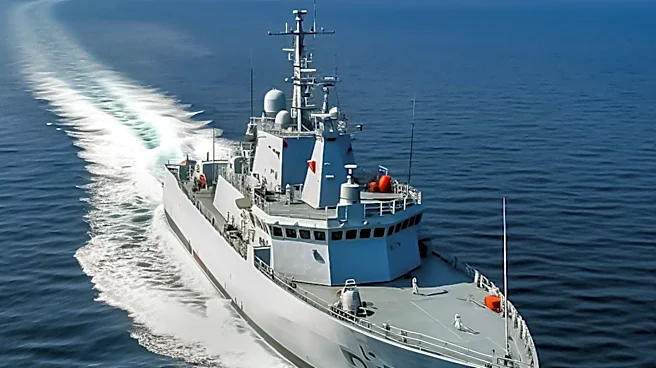
Frontex, the European Border and Coast Guard Agency, has deployed a patrol vessel to the English Channel for the first first time. This deployment aims to support French search and rescue operations involving small, overcrowded boats. The Spanish Guardia
Civil offshore patrol vessel, Duque de Ahumada, began operations this week and will be replaced by the Río Segura in late September. This vessel will work in conjunction with a surveillance aircraft that Frontex has operated over the Channel since 2021. The mission is to enhance situational awareness by detecting, verifying, and tracking small boats, providing real-time information to French authorities. This initiative is coordinated by the Maritime Rescue Coordination Centre (MRCC) Gris-Nez and operates under the authority of the Manche Mer du Nord Maritime Prefect. Frontex Executive Director Hans Leijtens stated that the deployment is intended to provide more visibility, enabling national authorities to make faster decisions, improve coordination, and better protect lives. Frontex's role is strictly limited to French search and rescue operations and will not involve interception activities in the maritime area.
Why It's Important?
This deployment signifies a notable escalation in European efforts to manage migration and enhance border security in the English Channel, a critical maritime route. The increased surveillance and real-time information sharing are intended to improve the effectiveness of search and rescue operations, potentially reducing the loss of life associated with dangerous crossings. For the U.S., while not directly involved, this development highlights the ongoing challenges of international migration and border management that resonate globally. The methods and technologies employed by Frontex could inform or influence discussions on border security strategies in other regions. Furthermore, the emphasis on data sharing and coordinated international efforts reflects a broader trend in addressing complex transnational issues, which could set precedents for future collaborations on security and humanitarian concerns. The focus on humanitarian aid through search and rescue, rather than interception, also underscores a nuanced approach to border control that balances security with human rights.
What's Next?
The initial deployment of the Duque de Ahumada will be followed by the Río Segura in late September, with other Member States expected to contribute additional vessels in the coming months. This suggests a sustained and potentially expanding presence of Frontex in the English Channel. The effectiveness of this enhanced surveillance and coordination will likely be continuously evaluated, influencing future operational strategies and resource allocation. National authorities will remain fully responsible for law enforcement and search and rescue within their own waters, with Frontex providing support in situational awareness. The ongoing integration of these efforts into the existing search and rescue task force will be crucial for seamless operations. Future discussions may also focus on the long-term funding and sustainability of such deployments, as well as potential expansions of Frontex's mandate or operational areas in response to evolving migration patterns and security needs.
Beyond the Headlines
The deployment of Frontex in the English Channel raises deeper questions about the balance between national sovereignty and supranational cooperation in border management. While Frontex emphasizes its support role for French search and rescue, the presence of a European agency in national waters can have implications for jurisdiction and accountability. This initiative also highlights the ethical complexities of migration, where humanitarian concerns for those at sea intersect with national security interests and border control policies. The focus on 'seeing more' to 'do more' suggests a reliance on technology and data for decision-making, which could lead to debates about privacy, surveillance, and the potential for mission creep. The long-term impact on migration routes and the behavior of individuals attempting these crossings will also be a critical area of observation, as increased surveillance might deter some while potentially pushing others towards more dangerous alternatives. This situation underscores the ongoing tension between securing borders and upholding humanitarian principles in a globalized world.