




What's Happening?
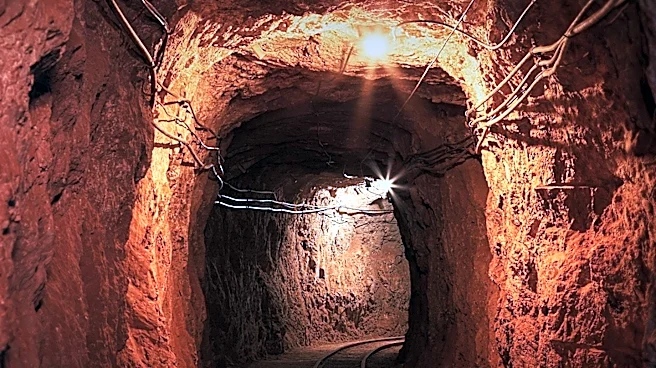
An investigation by ABC News and the I-Team has uncovered a hidden danger beneath communities in Illinois and Indiana: abandoned mines, some over a century old. Utilizing federal data, the investigation mapped hundreds of thousands of defunct mining sites
nationwide, including thousands in these two states. These sites, which range from coal mines to operations that extracted precious metals and uranium, have been linked to cave-ins and subsidence issues. Mine subsidence, the sinking or collapse of the ground due to failed underground mine tunnels, has caused significant damage. For instance, residents in Belleville, Illinois, reported cracked homes, and a massive sinkhole, 100 feet wide and 50 feet deep, swallowed a soccer field in Alton. The probe also documented instances where individuals died after falling into or being engulfed by the ground, and homes and vehicles sinking. Paul Santi, a professor of geological engineering at the Colorado School of Mines, emphasized the increased concern for shallower abandoned mines. The Illinois Department of Natural Resources has been monitoring abandoned mines since 1980, conducting numerous investigations and emergency cleanup actions annually.
Why It's Important?
The prevalence of abandoned mines in Illinois and Indiana presents a critical public safety and infrastructure challenge. The documented cases of sinkholes, damaged homes, and even fatalities underscore the immediate and severe risks to residents and property. The difficulty in precisely locating these old mine shafts, as highlighted by Coal City residents who purchased mine subsidence insurance, indicates a widespread and often unseen threat. Economically, the potential for property damage and the need for costly remediation efforts, estimated by the U.S. Department of the Interior to be around $14 billion nationwide for coal mines alone, place a significant burden on state and federal resources, as well as individual homeowners. The fragmented responsibility for different types of mines across multiple federal agencies further complicates a unified approach to addressing this pervasive issue, making it harder to assess the full scope of the problem and implement comprehensive solutions.
What's Next?
Addressing the risks posed by abandoned mines will require ongoing and coordinated efforts from state and federal agencies. The U.S. Department of the Interior acknowledges the complexity and cost of restoring land disturbed by these mines, indicating that a swift resolution is unlikely. Individuals who suspect an abandoned mine issue are encouraged to report it to their state natural resources agency, such as the Illinois DNR or Indiana DNR, which will likely continue their investigative and cleanup operations. Further mapping and data compilation efforts, similar to those undertaken by ABC News and the I-Team, will be crucial for better identifying and mitigating these hazards. The continued monitoring and emergency response actions by state departments, like the Illinois Department of Natural Resources, will be essential in managing immediate threats and preventing further incidents of subsidence and collapse in affected communities.
Beyond the Headlines
The issue of abandoned mines extends beyond immediate physical dangers, touching upon historical industrial practices and their long-term environmental and social legacies. Many of these mines, built over a century ago, represent a bygone era of resource extraction that fueled national development but left behind significant ecological and geological scars. The challenge of identifying and securing these sites highlights a broader societal responsibility to address the consequences of past industrial activities. Furthermore, the fragmented oversight across various federal agencies for different types of mines points to systemic issues in environmental and land management, suggesting a need for more unified regulatory frameworks. The ongoing threat to communities underscores the importance of historical data preservation and its integration with modern geological surveying techniques to protect current and future generations from the hidden dangers beneath their feet.