


What's Happening?
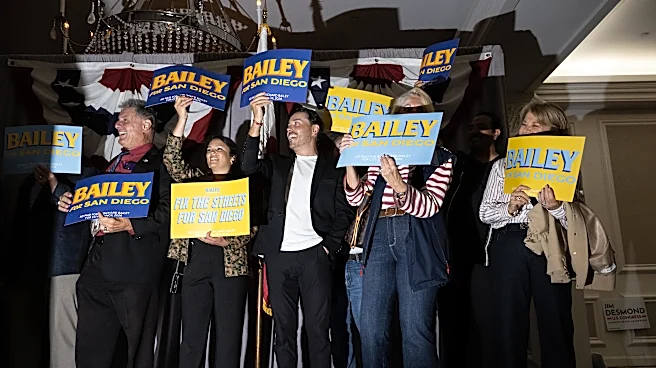
At least 29 known LGBTQ candidates have won or are presumed to have won seats in the recent Advisory Neighborhood Commission (ANC) elections in Washington D.C., according to election returns from the D.C. Board of Elections. These candidates were either
significantly ahead in vote counts or ran unopposed. Among the notable winners are Vida Rangel, who became the city’s first known transgender woman of color to win public office in ANC 1A10, and Dana White, who became the first known Black trans and nonbinary person elected to D.C. public office in ANC 6B04. Both Rangel and White ran unopposed. Steven “Stevie” McCarty, president of Capital Stonewall Democrats, also secured a win in ANC 2G04, having run unopposed. These victories are part of a broader effort, including the 'Queering ANC' campaign, to increase LGBTQ representation in local D.C. governance.
Why It's Important?
The significant number of LGBTQ candidates winning ANC seats in Washington D.C. marks a notable advancement in political representation for the community. The election of Vida Rangel as the first known transgender woman of color and Dana White as the first known Black trans and nonbinary person to D.C. public office sets important precedents, highlighting increasing diversity within local government. These wins demonstrate the growing influence and organizing power of LGBTQ political groups like Capital Stonewall Democrats, which actively recruited and supported these candidates. While ANCs do not have direct legislative authority, their recommendations carry 'great weight' with elected city officials on crucial local issues such as zoning, traffic, and liquor licenses, meaning these newly elected commissioners will have a direct impact on neighborhood-level policies and community development.
What's Next?
The newly elected Advisory Neighborhood Commissioners, including the 29 LGBTQ individuals, will serve two-year terms, beginning their work to influence local policy and community development in their respective single-member districts. Their roles will involve making recommendations to elected city officials on a wide array of neighborhood issues, from urban planning to local business regulations. The success of the 'Queering ANC' campaign may inspire similar initiatives in other U.S. cities, potentially leading to increased LGBTQ representation in local governance nationwide. The D.C. Board of Elections will continue to finalize vote counts, particularly for races with closer margins, though the majority of these LGBTQ candidates are already confirmed or presumed winners.
Beyond the Headlines
These election results reflect a broader societal shift towards greater inclusivity and representation in political spheres. The election of transgender and nonbinary individuals, particularly those of color, challenges traditional political norms and highlights the evolving demographics and values of urban electorates. This trend could encourage more diverse candidates to seek public office, fostering a more representative democracy at the local level. Furthermore, the success of targeted campaigns like 'Queering ANC' underscores the effectiveness of grassroots organizing in mobilizing specific communities and achieving political gains, potentially influencing future electoral strategies for underrepresented groups across the country. The increased visibility of LGBTQ individuals in local government can also serve to normalize and affirm diverse identities within public life.