
What's Happening?
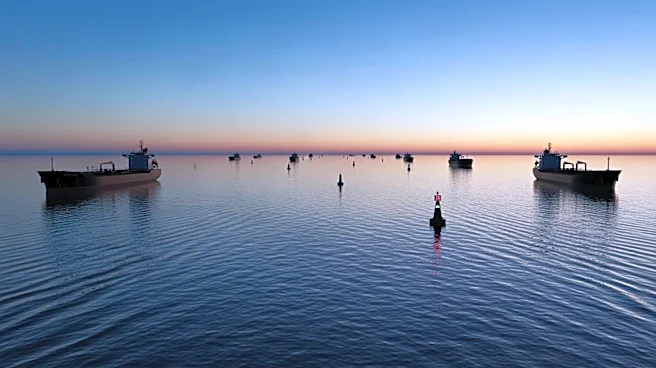
Recent data indicates a significant increase in vessel traffic through the Strait of Hormuz, with the seven-day rolling average for transits reaching its highest since the onset of the Iran conflict. This
uptick includes a variety of vessels, such as liquefied petroleum gas carriers, some of which are headed to India and others with Iranian affiliations. A total of 13 ships have crossed since Friday morning, with 10 exiting the Persian Gulf and three entering from the open seas. Iran has implemented a tolling system and directed most vessels to navigate a specific route close to its border, between the Iranian islands of Larak and Qeshm. The increase in traffic is notable given that, in normal times, about a fifth of the world's oil and liquefied natural gas passes through this strategic waterway daily.
Why It's Important?
The Strait of Hormuz is a critical chokepoint for global energy supplies, with a significant portion of the world's oil and liquefied natural gas transiting through it. The increased vessel traffic, despite the ongoing conflict, suggests a complex interplay of diplomatic negotiations and strategic maneuvers by various nations and shipping companies. The ability of vessels to navigate this route is crucial for maintaining global energy stability and economic balance. The situation highlights the geopolitical tensions in the region and the potential for disruptions in energy supplies, which could have far-reaching implications for global markets and energy prices.
What's Next?
As the situation evolves, continued monitoring of vessel movements and diplomatic engagements will be essential. The potential for further escalation or resolution of the conflict could significantly impact transit patterns and global energy markets. Stakeholders, including governments and shipping companies, may need to adapt strategies to ensure safe and efficient passage through the Strait of Hormuz. Additionally, the international community may increase diplomatic efforts to stabilize the region and secure this vital maritime route.