







What's Happening?
Several Chinese robotaxi companies are advancing their expansion plans in the United Arab Emirates (UAE) despite the ongoing conflict in Iran. Didi, a prominent ride-hailing company, announced its intention to conduct its first overseas robotaxi test
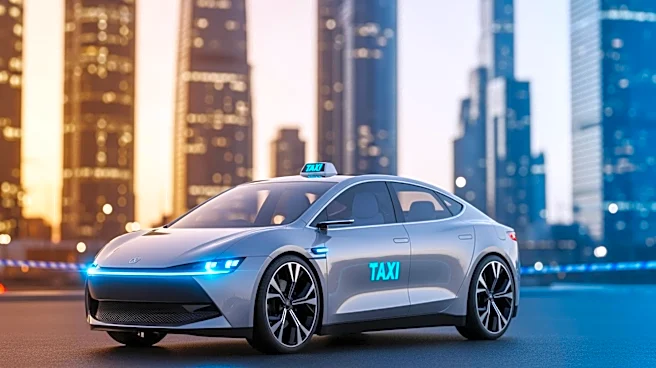
in the UAE later this year. This announcement was made by Zhang Bo, co-founder of Didi and head of its autonomous driving business, during a UAE-China business cooperation forum in Beijing. The forum coincided with a state visit by Abu Dhabi Crown Prince Sheikh Khaled bin Mohamed bin Zayed Al Nahyan to China, where he met with Chinese President Xi Jinping. In addition to Didi, Guangzhou-based WeRide has already launched a fully driverless, fare-charging robotaxi service in Dubai's Jumeirah and Umm Suqeim districts, accessible through Uber's app. Pony.ai, another Chinese robotaxi company, is also pursuing commercial operations in Dubai, having received permission from Dubai's Roads and Transport Authority to test autonomous driving locally.
Why It's Important?
The expansion of Chinese robotaxi companies into the UAE signifies a strategic move to tap into the Middle Eastern market, which is seen as a lucrative opportunity for autonomous vehicle technology. This development highlights the growing interest and investment in autonomous driving technologies by Chinese firms, despite geopolitical tensions in the region. The UAE's openness to testing and deploying such technologies could position it as a leader in the adoption of autonomous vehicles, potentially influencing other countries in the region to follow suit. For the Chinese companies involved, successful operations in the UAE could pave the way for further international expansion and bolster their competitive edge in the global autonomous vehicle market.
What's Next?
As these Chinese robotaxi companies proceed with their expansion plans, they may face regulatory and operational challenges in the UAE. The success of their operations could depend on the stability of the geopolitical situation in the region, as well as the UAE's regulatory environment for autonomous vehicles. Stakeholders, including local governments and transportation authorities, will likely monitor these developments closely. The outcome of these initiatives could influence future policies and regulations regarding autonomous vehicles in the UAE and potentially other parts of the Middle East.