






What's Happening?
SusHi Tech Tokyo 2026 will provide free AI translation services to attendees, enhancing communication and interaction at the event. The services include an AI translation app called 'Simultaneous Interpretation' developed by Kotoba Technologies, which
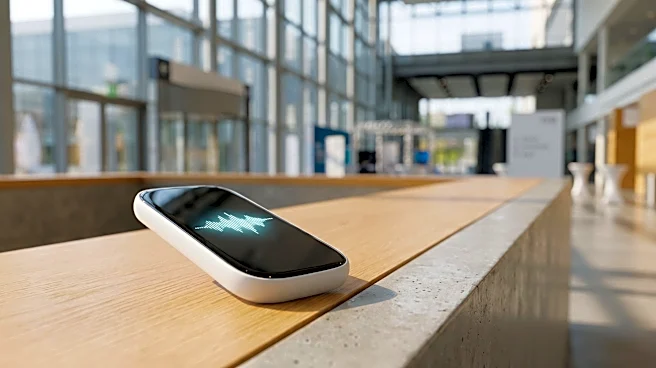
will be available for download via QR codes posted at various locations, including the Atrium (Information). Additionally, AI translation devices named 'POCKETALK' will be available for rent free of charge at the Atrium (Information). The number of these rental devices is limited and will be provided on a first-come, first-served basis. These initiatives aim to facilitate seamless communication among participants from diverse linguistic backgrounds throughout the duration of the event.
Why It's Important?
The provision of free AI translation services at SusHi Tech Tokyo 2026 highlights a growing trend in international events to leverage technology for improved accessibility and inclusivity. By removing language barriers, the event aims to foster broader participation and collaboration among global attendees, including potential U.S. businesses and innovators. This approach can significantly enhance networking opportunities, facilitate the exchange of ideas, and potentially lead to new partnerships and investments. For U.S. companies or individuals attending, these services reduce the logistical challenges associated with language differences, making the event more productive and engaging. It also showcases the practical application of AI in real-world settings, demonstrating its potential to streamline international interactions in various sectors.
What's Next?
The implementation of these AI translation services at SusHi Tech Tokyo 2026 will serve as a case study for future international conferences and events. Success in facilitating communication and enhancing attendee experience could lead to wider adoption of similar technologies in other global gatherings. Event organizers will likely monitor user feedback and the effectiveness of both the app and the rental devices to refine their offerings. This could also spur further innovation in AI-powered translation tools, potentially leading to more advanced and integrated solutions for real-time, multilingual communication. The experience gained could influence how U.S. event planners approach language accessibility in their own international endeavors.
Beyond the Headlines
The integration of AI translation tools at SusHi Tech Tokyo 2026 reflects a broader societal shift towards leveraging artificial intelligence to bridge cultural and linguistic divides. This development has implications beyond event facilitation, touching upon global business, education, and diplomacy. As AI translation becomes more sophisticated and accessible, it could fundamentally alter how international collaborations are conducted, making cross-border interactions more efficient and less prone to miscommunication. However, it also raises questions about the nuances of human communication, the role of professional interpreters, and the potential for AI to sometimes miss cultural subtleties. The ethical considerations of data privacy and the accuracy of AI translations will also remain critical as these technologies become more pervasive.