








What's Happening?
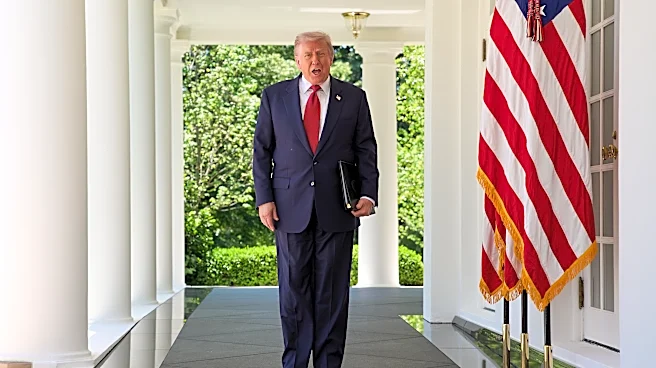
President Donald Trump has announced a three-day ceasefire between Russia and Ukraine, set to occur from May 9 to May 11. This agreement includes a prisoner swap of 1,000 prisoners from each country. The ceasefire aligns with Russia's Victory Day celebrations,
commemorating the end of World War II. The announcement was made on Truth Social, with both Ukrainian President Volodymyr Zelenskyy and Russian President Vladimir Putin agreeing to the terms. The ceasefire is part of ongoing U.S. efforts to mediate an end to the conflict, which has persisted for over four years. The agreement is seen as a potential step towards a broader peace settlement.
Why It's Important?
The ceasefire and prisoner swap highlight the United States' role in mediating international conflicts and its influence in the Russia-Ukraine war. This development could reduce hostilities and improve humanitarian conditions, potentially leading to more comprehensive peace negotiations. The conflict has had significant geopolitical and humanitarian impacts, affecting regional stability and international relations. The U.S. involvement underscores its commitment to conflict resolution and diplomacy. However, the success of this ceasefire in achieving lasting peace remains uncertain, given the complex issues involved, including territorial disputes and historical tensions.
What's Next?
Following the ceasefire, further diplomatic efforts are expected to continue, with the aim of reaching a more permanent resolution to the conflict. The prisoner swap could build trust between the parties, facilitating more comprehensive peace talks. However, challenges remain, including territorial disputes and mutual distrust. The international community will likely monitor the situation closely, with potential implications for future U.S. foreign policy and its role in global conflict mediation.