




What's Happening?
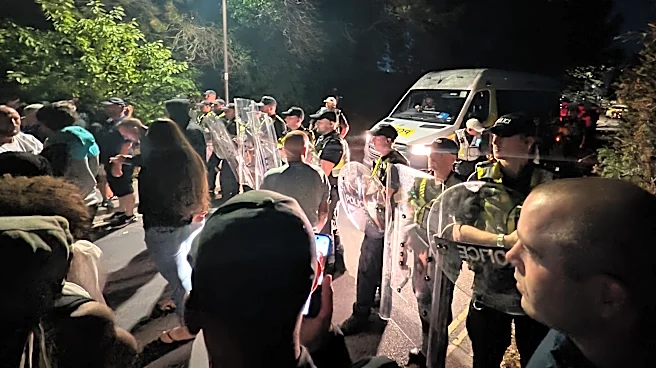
Far-right anti-migrant protests have escalated in the UK, with a recent demonstration in Portsmouth turning violent. Police officers were injured and vehicles damaged when approximately 200 activists confronted authorities attempting to transport 140
asylum seekers who had arrived by small boat. This incident occurred less than 48 hours after masked individuals blockaded roads in Dover in a similar anti-migrant protest. The Home Office has condemned the "intimidating and thuggish behaviour," while politicians and campaigners express concerns about further unrest, particularly along the southern coast, given that 625 people crossed the English Channel illegally in the past seven days. There are also fears that traffickers might be shifting their landing locations along England's coast to avoid heavily patrolled areas like Calais to Dover. A dinghy carrying migrants made one of the longest journeys recorded, landing as far west as Hampshire, a rare occurrence.
Why It's Important?
The escalating anti-migrant protests in the UK highlight growing social and political tensions surrounding immigration. The violence against police and the disruption caused by these demonstrations underscore a significant challenge to public order and law enforcement. The involvement of groups like the Patriot Platform, and their stated aim to create a voting bloc, suggests a potential for increased political mobilization of far-right sentiments. This situation could influence future immigration policies and resource allocation for border security and policing. The shift in migrant landing locations, if confirmed, could strain resources in new coastal communities and necessitate adjustments in border control strategies. The condemnation from the Home Office and calls from political figures to counter the "politics of poison" indicate a recognition of the divisive nature of these events and their potential to undermine social cohesion.
What's Next?
Authorities have launched an investigation to identify and prosecute those responsible for attacking officers and vehicles in Portsmouth, with Crime and Policing Minister Sarah Jones vowing that "disorder of any kind will never be tolerated." Anti-racism campaigners, such as HOPE, are urging authorities to take the threat of further mobilization seriously, suggesting that inaction could lead to worsening conditions. There is an expectation of continued vigilance along the UK's southern coast, as concerns persist about traffickers potentially altering their routes. Political leaders are likely to continue addressing the issue of illegal crossings and the associated protests, with calls to balance the right to peaceful protest with the need to maintain public order. The long-term implications could include a review of policing strategies for protests and border control measures.
Beyond the Headlines
The escalating protests reveal deeper societal divisions and anxieties regarding immigration, potentially fueled by economic pressures and cultural identity concerns. The use of paramilitary-style attire and the formation of groups aiming to influence political outcomes through direct action raise questions about the nature of democratic discourse and the potential for extremism. The narrative surrounding "vile criminal gangs exploiting our nation's generosity" reflects a broader debate about the ethics of asylum and the responsibilities of host nations. The incidents also highlight the complex interplay between national security, human rights, and community integration. The shift in migrant routes could also expose new communities to the challenges and debates surrounding migrant arrivals, potentially leading to localized tensions and demands for increased government support and intervention.