




What's Happening?
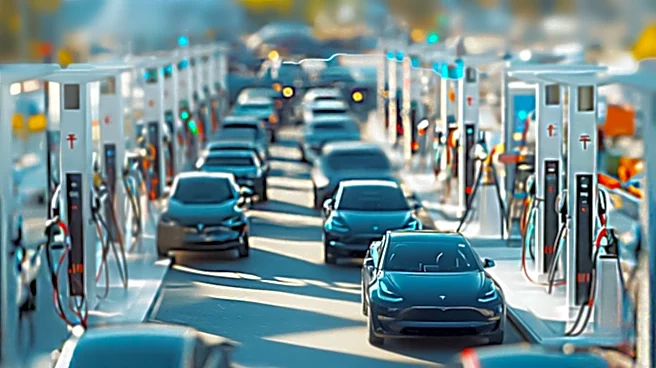
U.S. lawmakers have proposed a new annual fee of $130 for owners of battery electric vehicles (BEVs) to help fund federal road maintenance and repairs. This proposal is part of a broader legislative effort to reauthorize a five-year highway program with
a budget of $580 billion. The fee aims to compensate for the lack of fuel tax contributions from electric vehicles, which do not use gasoline or diesel. For plug-in hybrid vehicles (PHEVs), a $35 annual fee is proposed. The legislation also includes provisions for setting safety standards for self-driving commercial vehicles. The proposal is backed by key figures in the House Transportation and Infrastructure Committee, including Republican Chairman Sam Graves and senior Democrat Rick Larsen.
Why It's Important?
The proposed fee on electric vehicles represents a significant policy shift as the U.S. seeks to address funding shortfalls for road infrastructure, traditionally supported by fuel taxes. As electric vehicles become more prevalent, they contribute less to these funds, necessitating alternative revenue sources. This move could impact the adoption rate of electric vehicles by increasing ownership costs, potentially slowing the transition to cleaner transportation. Additionally, the legislation's focus on self-driving vehicle safety standards highlights the growing importance of regulating emerging technologies in the transportation sector. The outcome of this proposal could influence future infrastructure funding models and the regulatory landscape for autonomous vehicles.
What's Next?
The proposed legislation will be reviewed by the House Transportation and Infrastructure Committee. If passed, it could set a precedent for other states to implement similar fees, affecting electric vehicle owners nationwide. The bill's progress will be closely watched by stakeholders in the automotive and transportation industries, as well as environmental groups advocating for sustainable transportation solutions. The upcoming U.S. congressional elections in November 2026 may also influence the bill's prospects, as political dynamics could shift priorities and negotiations.