



What's Happening?
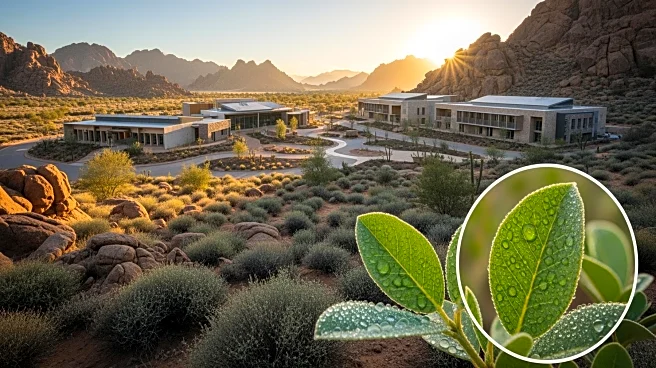
Cal State San Bernardino has announced the expansion of its Field-Based Learning, Outreach, and Workforce Scholarship (FLOWS) program to its Palm Desert campus. This initiative aims to provide university students with hands-on geospatial research opportunities,
preparing them for diverse career paths in environmental fields. The program connects students with local, regional, and state natural resource practitioners, community members, and Tribal leadership. This year, the FLOWS cohort includes eight students from Cal State San Bernardino and Cal State Northridge. The program's expansion to Palm Desert allows students to engage in desert-based environmental learning, focusing on the Coachella Valley's unique ecosystem. Recent collaborations include partnerships with the Agua Caliente Band of Cahuilla Indians, Native American Land of Conservancy, and the Audubon Society, where students study regional water systems, restoration efforts, and Indigenous governance.
Why It's Important?
The expansion of the FLOWS program to the Palm Desert campus is significant as it enhances educational opportunities for students in environmental studies, providing them with practical skills and knowledge essential for careers in this field. By involving students in real-world environmental challenges and connecting them with industry professionals and Tribal leaders, the program strengthens workforce pathways and regional partnerships. This initiative not only benefits students by enhancing their employability but also contributes to the broader goal of environmental conservation and sustainability in Southern California. The program's focus on community-driven environmental workforce training is crucial in addressing the growing need for skilled professionals in the environmental sector.
What's Next?
As the FLOWS program continues to develop, it is expected to further integrate with local communities and expand its partnerships with environmental organizations. Future cohorts may see increased collaboration with additional Tribal groups and conservation societies, providing students with even more diverse learning experiences. The program's success could lead to similar initiatives being adopted by other universities, promoting a broader commitment to environmental education and workforce development. Stakeholders, including educational institutions, environmental organizations, and government agencies, may look to this program as a model for fostering sustainable practices and preparing the next generation of environmental leaders.