







What's Happening?
Former Mexican President Enrique Peña Nieto is featured in a new docuseries titled 'Operación Cisne Negro' (Operation Black Swan), which reconstructs the final capture of Joaquín 'El Chapo' Guzmán. The series, produced by ViX, delves into the events surrounding
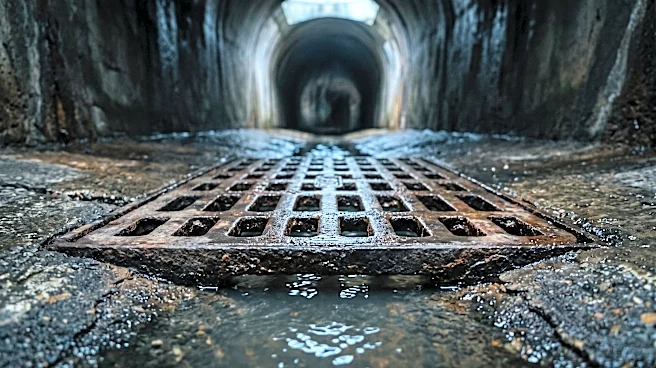
Guzmán's arrest on January 8, 2016, in Los Mochis, Sinaloa. Peña Nieto, who was president at the time, speaks about the operation, which was a significant event during his administration. The docuseries also includes interviews with other officials involved in security during that period, such as Miguel Ángel Osorio Chong, Renato Sales Heredia, Arely Gómez, and Alfonso Navarrete Prida. The operation, led by special forces of the Navy, resulted in five alleged sicarios dead, six arrests, and one marine injured. Guzmán initially escaped through a drainage system with his head of security, 'El Cholo Iván,' but both were eventually apprehended by federal police. The production aims to explore various accounts of the capture under the tagline 'This... is not fiction.'
Why It's Important?
The docuseries is important as it offers a new perspective on a high-profile event that had significant implications for U.S.-Mexico relations and the ongoing fight against drug trafficking. The capture of 'El Chapo' Guzmán was a major victory for law enforcement and a symbolic blow to the Sinaloa Cartel, one of the most powerful criminal organizations operating across North America. His subsequent extradition to the United States in 2017 and conviction on drug trafficking charges underscored the collaborative efforts between the two countries in combating organized crime. The series' focus on the details of the operation and the involvement of former Mexican officials could shed light on the complexities and challenges of such high-stakes law enforcement actions. For U.S. stakeholders, understanding the intricacies of these operations is crucial for developing effective strategies to counter drug flow and transnational criminal networks that impact American communities.
What's Next?
The release of 'Operación Cisne Negro' is expected to reignite public discussion and scrutiny regarding the capture of 'El Chapo' Guzmán. The docuseries, by featuring former President Peña Nieto and other key officials, may prompt further analysis of the strategies and decisions made during the operation. It could also lead to renewed interest in the broader context of drug enforcement policies in Mexico and their impact on the United States. The series' promise to review different versions of the capture suggests that it might uncover previously unhighlighted details or perspectives, potentially influencing public perception and historical narratives surrounding the event. For U.S. law enforcement and policymakers, the insights gained from such a detailed account could inform future cooperative efforts with Mexico in addressing organized crime and drug trafficking.
Beyond the Headlines
Beyond the immediate narrative of 'El Chapo' Guzmán's capture, the docuseries touches upon deeper implications concerning the nature of power, accountability, and the media's role in shaping public understanding of complex events. The question posed by the documentary, 'Who really captured Joaquín Guzmán?', suggests an exploration of the political and operational dynamics behind such a significant arrest. This could highlight the often-blurred lines between political maneuvering and law enforcement actions in high-profile cases. Furthermore, the series' tagline, 'This... is not fiction,' underscores the challenge of distinguishing fact from narrative in events that capture global attention. For the U.S., where the consequences of drug trafficking are deeply felt, understanding these underlying dynamics is crucial for fostering more effective and transparent international collaborations in combating organized crime and ensuring justice.