
What's Happening?
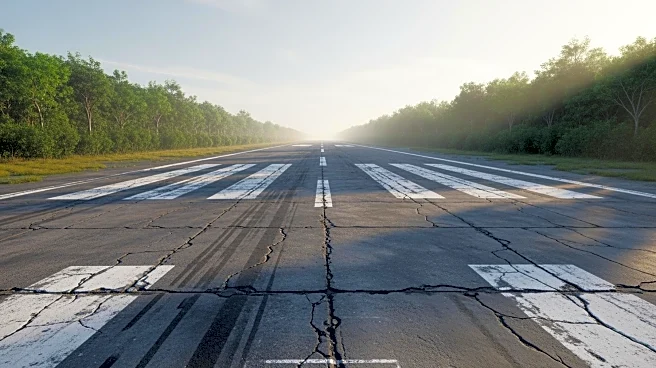
China is nearing completion of a project to rebuild a World War II-era airfield on Wolaei atoll in the Federated States of Micronesia. This development is part of China's broader strategy to expand its
influence in the South Pacific, a region critical to U.S. military strategy. The airfield, originally built by Japanese forces and later used by the U.S. Navy, is being redeveloped by a Chinese state-run company. The project is expected to enhance connectivity for the atoll's residents but also raises concerns about China's growing presence in a region traditionally under U.S. influence.
Why It's Important?
The reconstruction of the airfield signifies China's strategic ambitions in the Pacific, potentially challenging U.S. military and political influence. The South Pacific is a key area for U.S. defense strategy, particularly in containing China's military expansion. China's investment in infrastructure projects could shift regional alliances and erode U.S. influence. This development may prompt the U.S. to increase its own investments and diplomatic efforts in the region to counterbalance China's growing presence.
What's Next?
The U.S. may respond by enhancing its military and economic engagement with Pacific island nations, potentially increasing aid and infrastructure investments. Regional allies, such as Australia and New Zealand, might also play a role in countering China's influence. The completion of the airfield could lead to increased Chinese military activities in the region, prompting further strategic adjustments by the U.S. and its allies.