









What's Happening?
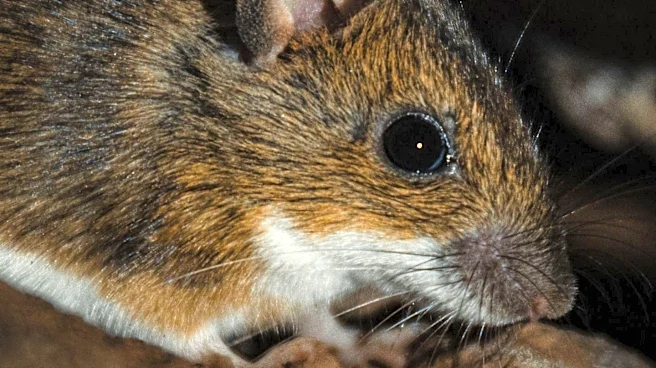
Researchers from the University of Oklahoma, led by Professor Naim M. Bautista, have conducted a study on the physiological adaptations of the Andean leaf-eared mice, which inhabit elevations exceeding 6000 meters above sea level. These mice have evolved
to survive in extreme conditions characterized by low oxygen levels and freezing temperatures. The study, published in Science, involved collecting mice from various altitudes in the Andes Mountains to examine their ability to generate heat and process dietary toxins. The research revealed that high-altitude mice possess unique adaptations, such as increased thermogenic capacity and genes that allow them to metabolize plant-derived toxins. Despite these adaptations, the mice exhibit minimal genetic differentiation across different altitudes, suggesting strong natural selection pressures favoring high-altitude traits.
Why It's Important?
The study of the Andean leaf-eared mice provides valuable insights into how mammals can adapt to extreme environmental conditions. Understanding these adaptations can inform broader ecological and evolutionary theories, particularly regarding how species survive in hostile environments. The findings may have implications for conservation efforts, as they highlight the importance of genetic diversity and adaptation in species survival. Additionally, the research could contribute to understanding how climate change might impact species living in extreme conditions, as these mice serve as a model for studying physiological resilience and adaptation.
What's Next?
The research team plans to continue their studies in the Andes, focusing on populations of Andean leaf-eared mice and other small mammals on the Argentinian side of the mountain range. They aim to determine if the observed adaptations are part of a larger pattern affecting other species. This ongoing research could further elucidate the mechanisms of adaptation and survival in extreme environments, potentially leading to new discoveries in evolutionary biology and ecology.
Beyond the Headlines
The study raises questions about the role of genomic regulation in adaptation and evolution. The lack of genetic differentiation among high-altitude and low-altitude mice suggests that gene flow and natural selection are critical factors in maintaining adaptive traits. This research underscores the complexity of evolutionary processes and the importance of considering both genetic and environmental factors in understanding species adaptation.