




What's Happening?
Ann Arbor has approved the first rezoning for high-density suburban housing, paving the way for the Arbor South development. This project marks the initial application of a new city planning designation, TC1 (Transit Corridor), designed to create density outside
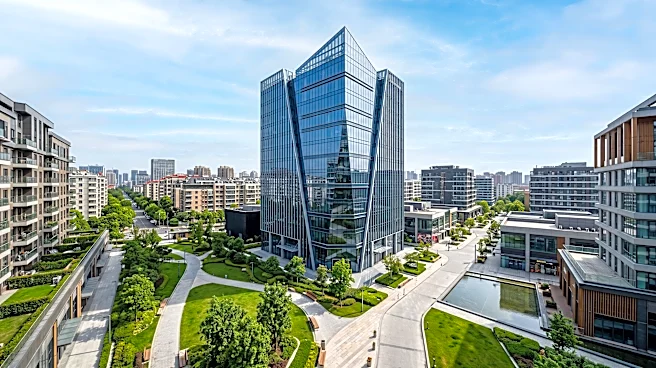
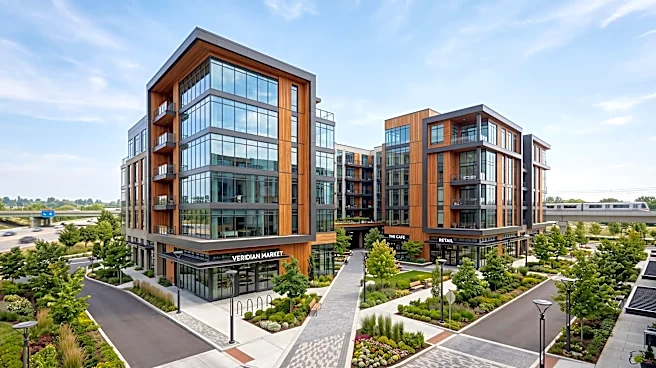
the city's core. The development, a collaboration between Oxford Companies and Crawford Hoying, will feature over 1,000 residential and commercial units. It is slated to begin construction next year in phases, located in southeast Ann Arbor near the State Street entrance from Interstate 94 into downtown. The site, previously underutilized with parking lots and office buildings, will be transformed into a mixed-use campus. The plan includes several six-story buildings, 100,000 square feet of ground-floor commercial spaces, standalone restaurants, condominiums, and a hotel. A significant aspect of the project is the inclusion of 200 affordable housing units, which will be owned and operated by the Ann Arbor Housing Commission, adding 20% more affordable units to the city's total.
Why It's Important?
This development is significant for Ann Arbor as it addresses the city's housing crisis by introducing a substantial number of new units, including a dedicated portion for affordable housing. The project's use of the new TC1 zoning designation sets a precedent for future high-density developments in suburban areas, potentially reshaping urban planning strategies in similar college towns across the U.S. By creating a mixed-use community with residential, commercial, and hospitality components, Arbor South aims to attract young working professionals and families, contributing to the city's economic vitality and lifestyle offerings. The emphasis on open areas and a one-acre park, named Grove Park, also highlights a trend towards integrating green spaces and community amenities within large-scale developments, enhancing livability and public engagement. The project's $600 million cost, partially funded through Tax Increment Financing (TIF), demonstrates a model for urban redevelopment that leverages future property tax revenues to finance eligible activities without increasing taxes on neighboring properties.
What's Next?
Construction for the Arbor South complex is scheduled to commence in the first quarter of 2027, starting with 'B Block,' which will include two mixed-use sites with 370 residential units and a parking structure. The overall project is expected to take several years to complete. Developers are working to finalize private financing, with an expected close by the end of the current year. The Tax Increment Financing (TIF) component, providing over $300 million over 30 years, will continue to support the redevelopment. Future steps will involve managing the construction process while maintaining operations at existing office buildings on the site, including ensuring street access. The success of this project, particularly its integration of high-density housing, commercial spaces, and affordable units, will likely influence future urban planning decisions and zoning adjustments in Ann Arbor and potentially serve as a case study for other U.S. cities facing similar housing and development challenges.
Beyond the Headlines
The Arbor South development represents a broader shift in urban planning philosophy, moving away from traditional suburban sprawl towards densification and mixed-use communities. This project's pioneering use of the TC1 zoning designation in Ann Arbor could inspire other cities to adopt similar strategies to combat housing shortages and promote sustainable urban growth. The integration of 200 affordable housing units directly into the development, with ownership and operation by the Ann Arbor Housing Commission, highlights a progressive approach to addressing housing inequality within large-scale private developments. This model could become a blueprint for public-private partnerships aimed at creating more inclusive communities. Furthermore, the emphasis on creating a community with open spaces, parks, and amenities for both residents and the wider Ann Arbor community reflects a growing demand for walkable, amenity-rich urban environments that foster social interaction and quality of life, moving beyond mere residential or commercial functionality.