






What's Happening?
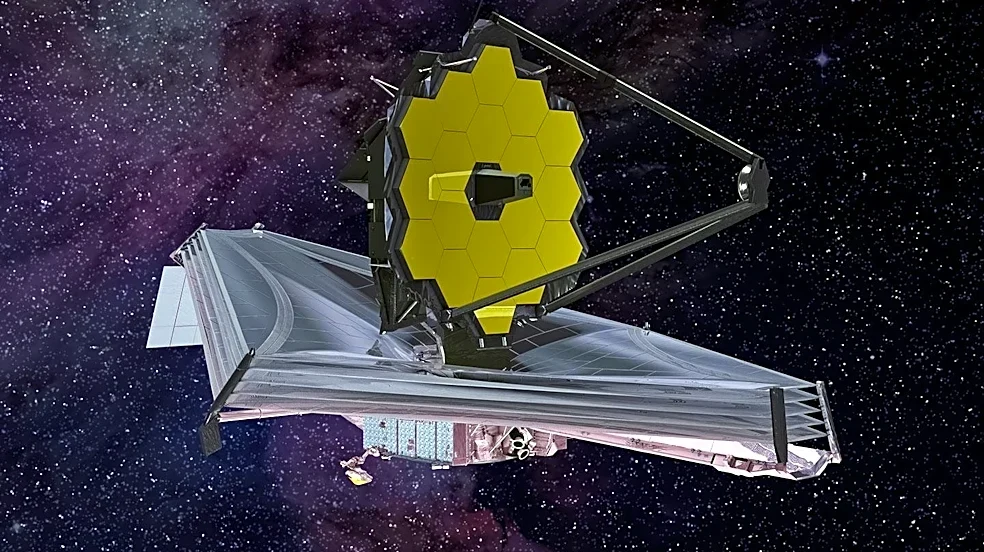
NASA's Spectro-Photometer for the History of the Universe, Epoch of Reionization, and Ices Explorer (SPHEREx) spacecraft has provided new insights into the atmospheres of brown dwarfs, often referred to as 'failed stars.' These celestial objects, which
bridge the gap between planets and stars, possess masses between 13 and 80 times that of Jupiter. Unlike stars, they lack sufficient mass to sustain hydrogen fusion in their cores, causing them to emit only a faint glow. A study led by Zafar Rustamkulov of Caltech, utilizing SPHEREx data, examined 37 nearby brown dwarfs across a spectrum of 102 wavelengths, from deep red to invisible infrared light. The findings indicate that the atmospheres of these brown dwarfs are chemically rich in water, carbon dioxide, carbon monoxide, and methane. While current models capture the general chemical trends, they struggle to accurately represent the complex cloud transitions and the distinct spectral variations observed even among brown dwarfs of similar temperatures. SPHEREx's ability to observe wavelengths absorbed by Earth's atmosphere has been crucial in these discoveries.
Why It's Important?
The detailed observations from NASA's SPHEREx telescope are significant for advancing our understanding of brown dwarfs, which have remained largely mysterious since their discovery in the 1990s. By revealing the chemical composition of their atmospheres, including water and methane, the study provides crucial data that challenges and refines existing theoretical models of these objects. The discrepancies between observed data and current models highlight gaps in our understanding of how brown dwarfs evolve, how their clouds form and dissipate, and the processes that govern their atmospheric chemistry. This research is vital for astronomers seeking to define the full range of brown dwarf characteristics and their place in the universe's evolution. Improved models could also enhance our ability to characterize exoplanets, as brown dwarfs share some atmospheric similarities with gas giants. The findings underscore the need for more sophisticated computational tools and observational techniques to fully comprehend these unique celestial bodies.
What's Next?
The SPHEREx mission is scheduled to scan the entire sky four times during its planned 25-month duration, with each pass expected to refine the spectral data. This ongoing data collection will provide a wealth of information for further analysis, allowing scientists to study thousands more brown dwarfs. The data collected by SPHEREx is freely available for download from the NASA/IPAC Infrared Science Archive, encouraging broader scientific community engagement in the research. Future efforts will focus on developing more accurate computer models that can better account for the complex cloud dynamics and chemical transitions observed in brown dwarf atmospheres. Researchers will also investigate whether the observed smooth shift towards methane in the current sample is representative or if a larger, more diverse sample will reveal greater variability. The findings serve as a call to action for astronomers to continue exploring these 'dark worlds' to unravel their remaining mysteries.
Beyond the Headlines
The study of brown dwarfs, facilitated by advanced telescopes like SPHEREx, delves into fundamental questions about cosmic evolution and the boundaries between stellar and planetary objects. The discovery of complex atmospheric chemistry, including water and methane, on these isolated celestial bodies offers a unique perspective on the potential for diverse chemical environments in the universe, even in the absence of a host star. The challenges in modeling these atmospheres highlight the inherent complexity of astrophysical phenomena and the limitations of current theoretical frameworks. This ongoing scientific endeavor not only expands our knowledge of individual cosmic objects but also contributes to a broader understanding of the universe's composition and the processes that govern its formation. The 'goth' analogy used by Zafar Rustamkulov underscores the solitary and enigmatic nature of these objects, adding a cultural dimension to their scientific exploration.