








What's Happening?
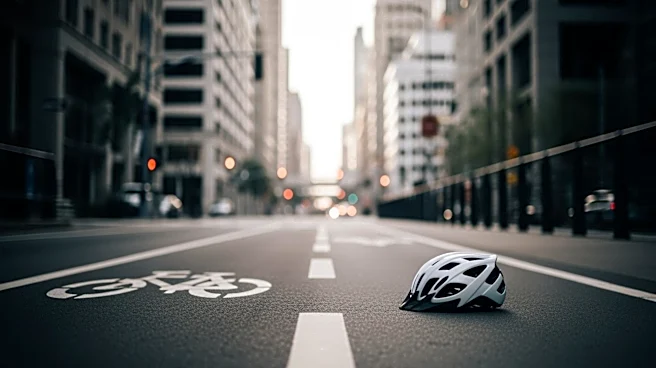
The recent death of Riley O'Neil, a cyclist and city planner, has sparked renewed calls for safer streets in Chicago. O'Neil was killed after being 'doored' by an illegally parked car, a tragic incident that has resonated with many in the community. A
vigil held in his honor drew hundreds, underscoring the widespread concern over traffic safety. This incident is part of a broader pattern of accidents involving cyclists and pedestrians in Chicago, particularly in areas with heavy traffic and wide roads that encourage speeding. Advocates are calling for improved infrastructure and policies to protect vulnerable road users.
Why It's Important?
O'Neil's death highlights the ongoing crisis of road safety in urban areas, where cyclists and pedestrians are often at risk. The incident underscores the need for comprehensive traffic safety measures, including better enforcement of parking regulations and the development of infrastructure that prioritizes non-motorized road users. The tragedy also reflects broader societal issues, such as the need for urban planning that considers the safety and accessibility of all residents. Addressing these challenges is crucial for reducing fatalities and injuries on the roads and fostering a more inclusive and sustainable urban environment.
What's Next?
In the wake of O'Neil's death, there is likely to be increased advocacy for policy changes and infrastructure improvements in Chicago. Community groups and city planners may push for the implementation of protected bike lanes, stricter enforcement of traffic laws, and public awareness campaigns to promote road safety. The city government may face pressure to allocate resources towards these initiatives and engage with stakeholders to develop effective solutions. The ongoing dialogue around traffic safety could lead to legislative action aimed at preventing similar tragedies in the future.