

What's Happening?
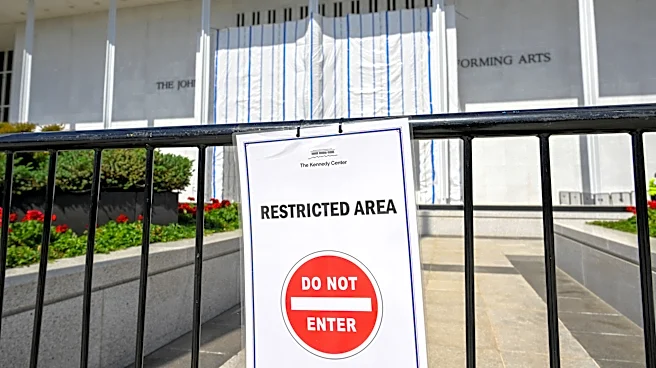
The Kennedy Center has informed a federal court that it will not attempt to restore President Trump's name to the building's facade before September 8, at the earliest. This decision comes amidst ongoing legal battles and opposition from individuals,
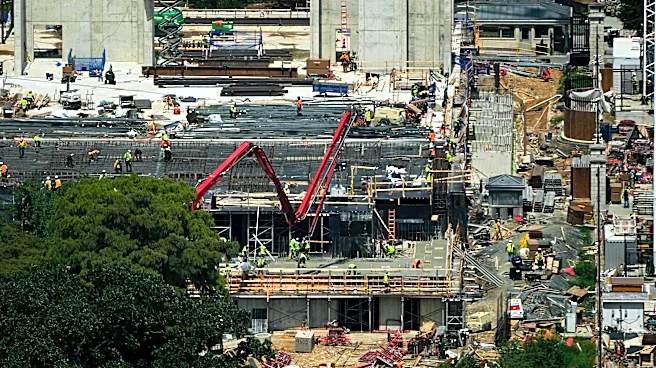
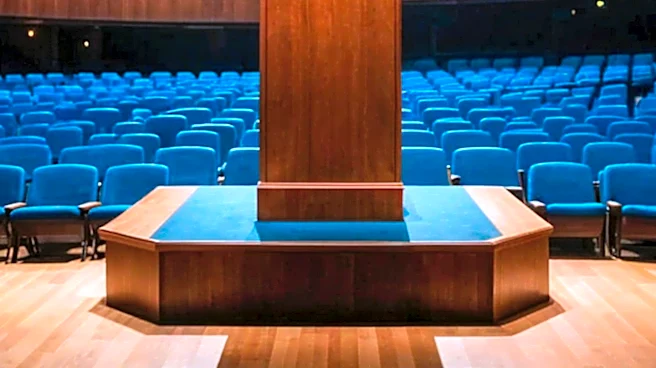
including Democratic Rep. Joyce Beatty, who argue that the Kennedy Center's Trump-aligned board is attempting to defy a previous court order. A federal judge had previously ruled that the initial placement of President Trump's name on the building was illegal and ordered its removal. Despite this, a recent board meeting, which was expected to focus on renovation options, instead resulted in a resolution to name the plaza in front of the building after President Trump and add his name to the venue's facade. The proposed inscription would read, 'The John F. Kennedy Center for the Performing Arts Restored and Renovated By President Donald J. Trump,' with an additional reference if the Trump Kennedy Center Fund reaches $100 million. The Kennedy Center also voted to back a two-year closure for renovations, with some programming moving off-site.
Why It's Important?
This ongoing dispute highlights the broader political and cultural tensions surrounding efforts to commemorate President Trump's legacy on national institutions. The legal challenges brought by Rep. Joyce Beatty underscore concerns about the proper governance and adherence to legal rulings by the Kennedy Center's board. The board's repeated attempts to affix President Trump's name to the building, despite a prior court order, raise questions about the independence and motivations of the institution's leadership. The proposed extensive renovations and potential two-year closure of the Kennedy Center, a prominent performing arts venue, could significantly impact the cultural landscape of Washington D.C., affecting artists, audiences, and the institution's financial stability. The controversy also reflects a larger trend of political figures seeking to leave a physical mark on national capital landmarks, often leading to public and legal contention.
What's Next?
Lawyers for Rep. Joyce Beatty are expected to press U.S. District Judge Christopher Cooper for an earlier ruling to prevent the Kennedy Center from reinstating President Trump's name after September 8. They argue that the board seems intent on defying the earlier court order. The Kennedy Center's commitment to not move forward with the plans until after Labor Day provides a window for further legal arguments and potential judicial intervention. The ongoing presence of a tarp covering the area where President Trump's name was previously affixed will likely remain a point of contention, with Beatty's lawyers questioning the Kennedy Center's stated reasons for its continued presence. The future of the proposed two-year renovation and the relocation of signature programming will also depend on the outcome of these legal and board decisions, potentially leading to further disruptions for the performing arts community.
Beyond the Headlines
The controversy surrounding the Kennedy Center's naming and renovation plans delves into deeper questions about the intersection of politics, art, and national heritage. The attempts to prominently feature President Trump's name on a cultural institution dedicated to President John F. Kennedy raise ethical considerations about historical preservation and the politicization of public spaces. The debate also touches upon the role of board governance in cultural institutions, particularly when board members are perceived to be aligned with specific political agendas. The legal battles underscore the importance of judicial oversight in ensuring that public institutions adhere to established laws and regulations. Furthermore, the dispute highlights the ongoing struggle to define and interpret national identity through monuments and public dedications, reflecting broader societal divisions and differing views on historical memory and legacy.