




What's Happening?
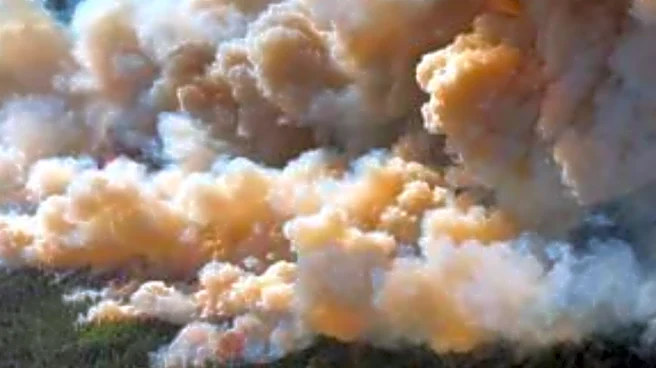
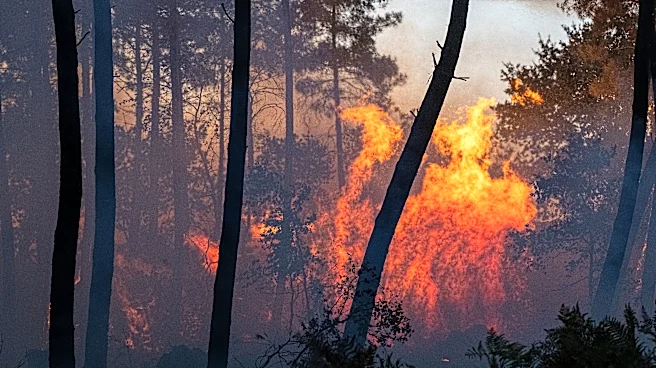
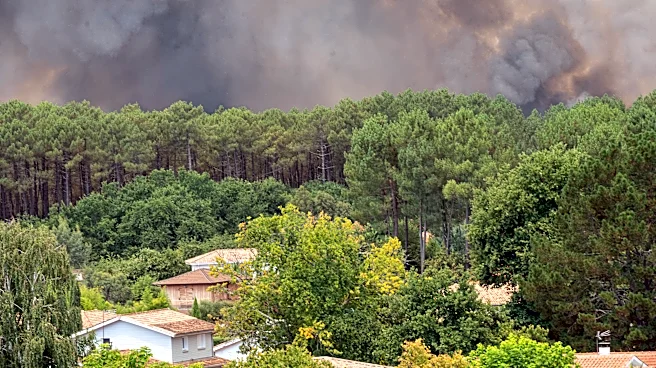
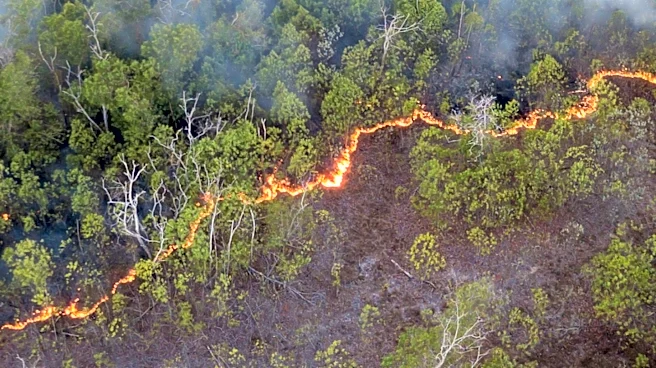
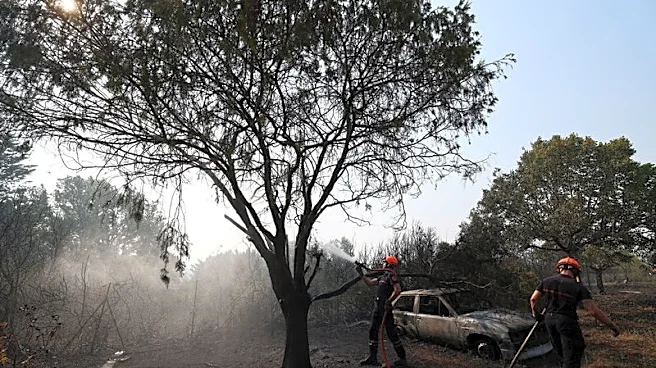
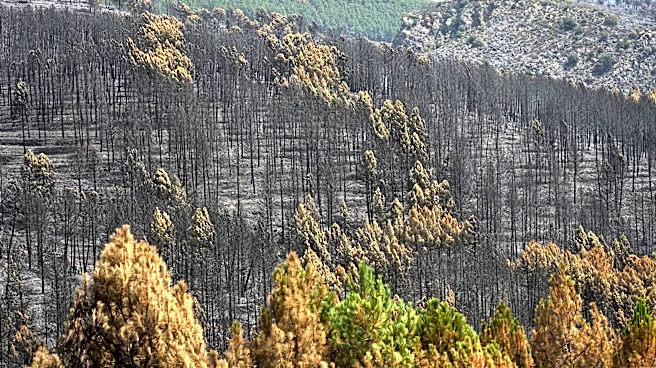
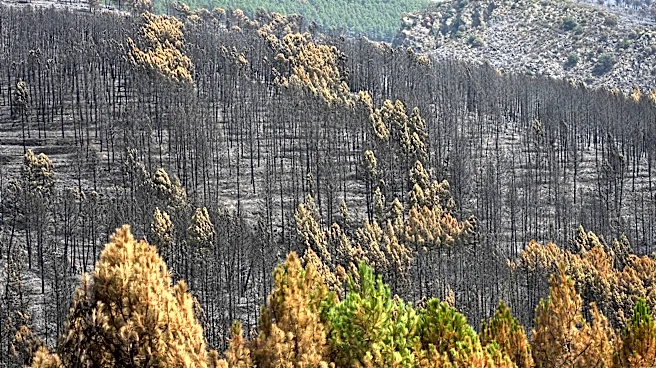
In France, wildfires have forced the evacuation of 40,000 people from the Cap Ferret peninsula, with the blaze described as the largest of the season. The fires have destroyed approximately 80 homes, with 50 completely lost. The French government has
activated the European Union's civil protection mechanism to request assistance, receiving commitments for water-bombing planes. The situation is part of a broader pattern of wildfires across Western Europe, exacerbated by record heatwaves. In Spain, similar conditions have led to the evacuation of over 10,000 people near Madrid, with the government declaring a state of emergency.
Why It's Important?
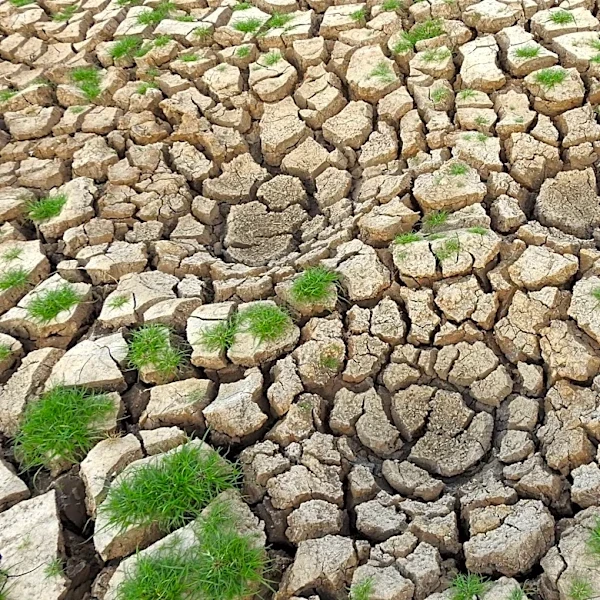
The wildfires in France and Spain are indicative of the growing threat posed by climate change, which is increasing the frequency and intensity of such events. The evacuations and destruction of property highlight the immediate human and economic costs. The reliance on EU support underscores the importance of regional cooperation in addressing transnational environmental challenges. These events may influence future policy decisions regarding climate adaptation and emergency response strategies, as well as investments in infrastructure to mitigate the impact of natural disasters.
What's Next?
Efforts to contain the fires are ongoing, with authorities in both countries focusing on preventing further spread. The French and Spanish governments may review and potentially revise their disaster preparedness and response plans. The EU's involvement could lead to enhanced mechanisms for collective action in future crises. In the aftermath, there may be increased advocacy for stronger climate policies and investments in sustainable land management practices to reduce vulnerability to wildfires.
Beyond the Headlines
The wildfires highlight the need for a comprehensive approach to climate resilience, encompassing not only immediate response but also long-term planning and adaptation. The psychological and social impacts on displaced communities are significant, necessitating support from mental health and social services. The events may also prompt a reevaluation of urban planning and development in fire-prone areas, with an emphasis on building resilience against future climate-related disasters.