
What's Happening?
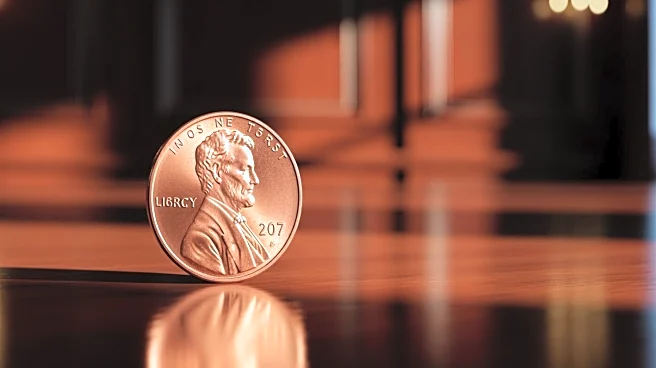
The U.S. Mint recently concluded the production of pennies, and the final sets of these coins were auctioned off for a total of $16.76 million. The auction, hosted by Stack’s Bowers Galleries, featured
232 sets, each containing three pennies: one from the Philadelphia Mint, one from the Denver Mint, and a 24-karat gold penny. These sets were marked with a unique Omega symbol to signify the end of penny production. The most notable sale was the 232nd set, which included the last three pennies ever made and sold for $800,000. This set also came with the three dies used to strike the Lincoln cents. John Kraljevich, director of numismatic Americana at Stack’s Bowers, highlighted the auction's uniqueness, noting the unpredictability of the market value until bids were placed.
Why It's Important?
The auction of the final U.S. pennies signifies a significant cultural and economic shift. The penny, once a staple of American currency since its introduction in 1793, has been phased out due to its declining practical value and rising production costs. This event marks the end of an era for numismatists and collectors who view these coins as historical artifacts. The high auction prices reflect the sentimental and cultural value placed on these coins, despite their lack of practical use in modern transactions. The cessation of penny production also highlights broader economic trends, such as the move towards digital transactions and the reevaluation of currency production costs.
What's Next?
With the end of penny production, the U.S. Mint and financial institutions may focus on optimizing the production and circulation of other denominations. This could lead to discussions on the future of physical currency in an increasingly digital economy. Collectors and investors might see a rise in the value of existing pennies, especially those with historical significance. Additionally, there may be increased interest in other discontinued or rare coins, as collectors seek to preserve pieces of monetary history.
Beyond the Headlines
The discontinuation of the penny raises questions about the future of small-denomination coins and their role in the economy. It also prompts a cultural reflection on the symbols and traditions embedded in currency. As society moves towards cashless transactions, the nostalgia associated with physical money may grow, influencing both collectors and the general public. This shift could also impact industries reliant on cash transactions, prompting adaptations in business models and consumer behavior.