
What's Happening?
A recent visit to Guangzhou, China, has revealed the city's advanced urban planning and integration of clean technology, offering a glimpse into a potential future for urban living. The city is characterized
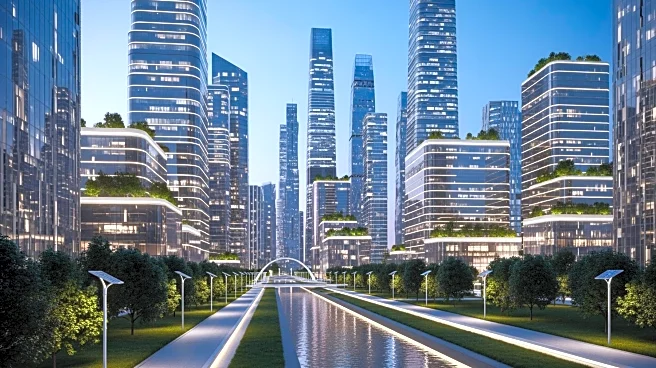
by its vertical architecture, extensive greenery, and efficient public transportation systems. Guangzhou's urban design includes parks atop shopping malls, underground malls for climate control, and a high prevalence of electric vehicles. The city is part of the Pearl River Delta megalopolis, which houses nearly 100 million people, yet it maintains a livable and appealing environment. The integration of technology and nature in Guangzhou's urban planning sets a benchmark for future city developments.
Why It's Important?
Guangzhou's approach to urban development is significant as it demonstrates how cities can be designed to be both efficient and environmentally friendly. By prioritizing green spaces, public transportation, and electric vehicles, Guangzhou reduces its carbon footprint and enhances the quality of life for its residents. This model of urban planning could influence U.S. cities facing challenges of pollution, congestion, and inefficient infrastructure. As cities worldwide grapple with the impacts of climate change, Guangzhou's example provides a viable blueprint for sustainable urban living, potentially guiding future policies and investments in urban development.
What's Next?
The success of Guangzhou's urban planning could inspire other cities, including those in the U.S., to adopt similar strategies. Urban planners and policymakers may look to Guangzhou as a case study for integrating technology and sustainability in city design. This could lead to increased investments in public transportation, green spaces, and renewable energy sources in urban areas. Additionally, as the global focus on reducing carbon emissions intensifies, cities may prioritize the development of infrastructure that supports electric vehicles and other clean technologies.
Beyond the Headlines
Guangzhou's urban development highlights the cultural shift towards valuing sustainability and livability in city planning. The city's emphasis on green spaces and public transportation reflects a growing recognition of the importance of environmental stewardship. This shift could lead to broader societal changes, such as increased public support for environmental policies and a greater emphasis on community-oriented urban design. As cities evolve, the balance between technological advancement and environmental preservation will be crucial in shaping the future of urban living.