



What's Happening?
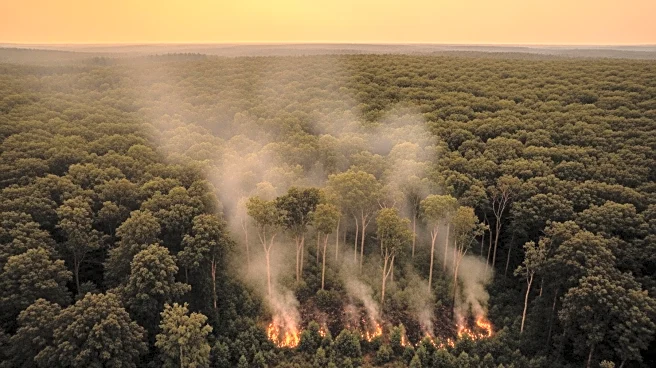
In January 2026, wildfires have erupted in Argentina's Chubut province, particularly affecting Los Alerces National Park, a UNESCO World Heritage site. NASA's Aqua satellite, equipped with the Moderate Resolution Imaging Spectroradiometer (MODIS), captured
images of smoke from two significant fires in the region. These fires began on January 6, 2026, and have since spread across more than 175 square kilometers (67 square miles) of Patagonia. The fires are burning through temperate Patagonian Andean forests, which include rare stands of alerce trees, known for their longevity and genetic diversity. The challenging weather conditions, including high temperatures, low humidity, and strong winds, have exacerbated the situation, making firefighting efforts difficult. As a result, approximately 3,000 tourists have been evacuated from nearby areas.
Why It's Important?
The fires in Los Alerces National Park pose a significant threat to one of the world's rarest forest ecosystems. The alerce trees, which are among the longest-living tree species on Earth, are crucial for biodiversity and ecological research. The destruction of these forests could lead to a loss of genetic diversity and impact the local environment and tourism industry, which is vital for the region's economy. The situation highlights the broader issue of climate change and its role in increasing the frequency and intensity of wildfires globally. The fires also underscore the importance of satellite technology in monitoring and managing natural disasters.
What's Next?
Efforts to control the fires will continue, with firefighters facing ongoing challenges due to adverse weather conditions. The situation may prompt discussions on improving fire management strategies and increasing resources for firefighting in remote areas. Additionally, there may be calls for enhanced international cooperation in addressing the impacts of climate change, which contribute to such natural disasters. The recovery of the affected areas will require significant time and resources, and the long-term ecological impacts will need to be assessed.
Beyond the Headlines
The fires in Patagonia could have long-term implications for conservation efforts and climate policy. The destruction of ancient forests may lead to increased carbon emissions, further exacerbating climate change. The event could also serve as a catalyst for policy changes aimed at protecting vulnerable ecosystems and mitigating the effects of climate change. Furthermore, the situation highlights the need for increased public awareness and education on the importance of preserving natural habitats.