







What's Happening?
Researchers from UC San Diego’s Scripps Institution of Oceanography have discovered that broadcasting sounds from healthy coral reefs can significantly attract baby fish and coral larvae to degraded reef areas. Two studies, published in 'Communications
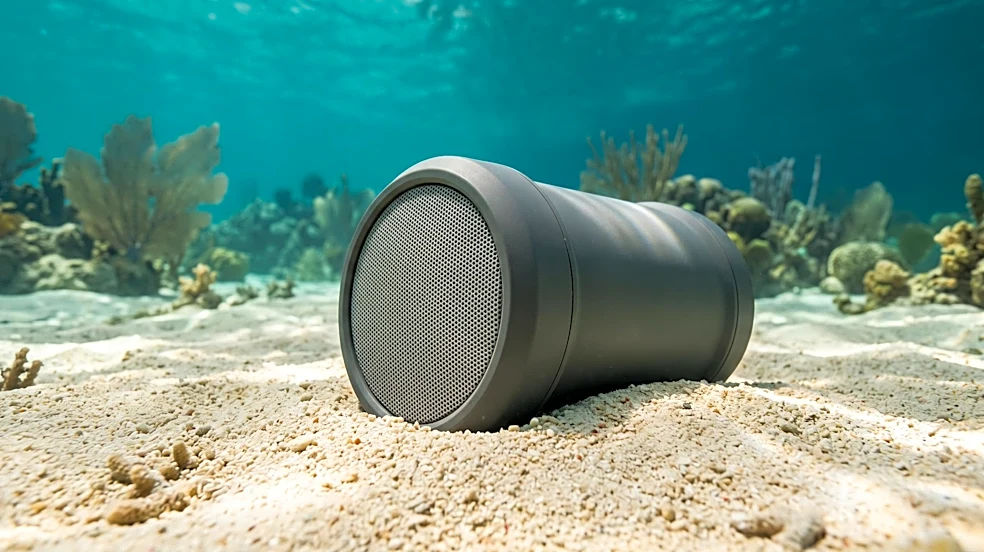
Biology' and 'Scientific Reports,' demonstrated that underwater speakers playing ambient reef sounds drew in four to fourteen times more fish larvae and increased coral larval settlement. The research involved collecting sounds from healthy reefs near O’ahu, Hawaii, and then broadcasting these recordings nightly for two weeks at a flat, sandy seafloor spot. Artificial structures, some treated with a bioactive substrate called BRINK, were placed around the speakers. The results showed that structures closest to the speakers had the highest levels of coral settlement, and the site with speakers attracted substantially more fish larvae compared to a control site without sound.
Why It's Important?
This research offers a groundbreaking approach to coral reef restoration, which is crucial for marine biodiversity and ecosystem health. Coral reefs are vital habitats for countless marine species, and their degradation due to climate change and other factors poses a significant threat to ocean ecosystems. By using acoustic enrichment, scientists can potentially accelerate the natural recovery processes of damaged reefs, providing a novel tool in conservation efforts. The ability to attract both coral and fish larvae to specific areas could help re-establish vibrant marine communities, supporting the food chain and protecting coastlines. This method is particularly important as it leverages a natural cue—sound—that is often overlooked in traditional restoration strategies, offering a sustainable and scalable solution to a global environmental challenge.
What's Next?
The Defense Advanced Research Projects Agency (DARPA) plans to implement these findings by installing a hybrid reef structure off the coast of O’ahu, incorporating the acoustic enrichment system and microstructures developed by Scripps researchers. Coral planting is scheduled for early 2027, marking a significant real-world application of this research. This initiative will serve as a critical test case for the effectiveness and scalability of acoustic enrichment in large-scale reef restoration projects. Future research will likely focus on optimizing sound profiles, understanding the long-term impacts of acoustic enrichment on reef ecosystems, and exploring its applicability in diverse marine environments globally. The success of these projects could lead to widespread adoption of sound-based restoration techniques, transforming how damaged coral reefs are rehabilitated.
Beyond the Headlines
The discovery highlights the often-underestimated role of sound in marine ecosystems, challenging the human-centric view that visual cues dominate animal perception. It underscores the complex sensory world of marine life and how subtle environmental factors, like ambient soundscapes, are critical for ecological processes such as larval settlement and habitat selection. This research could inspire further studies into the acoustic ecology of other ecosystems, potentially revealing new ways to understand and mitigate human impacts on natural environments. Ethically, it raises questions about the responsibility of humans to not only mitigate harm but actively restore natural systems using innovative, ecologically informed methods. The project also exemplifies the potential for interdisciplinary collaboration between marine biology and advanced technology in addressing pressing environmental issues.