








What's Happening?
The top US commander in the Middle East, Adm. Brad Cooper, has expressed a need for more bunker-buster bombs to address the increasing trend of adversaries moving key military assets underground. During a US House Armed Services Committee hearing, Cooper highlighted
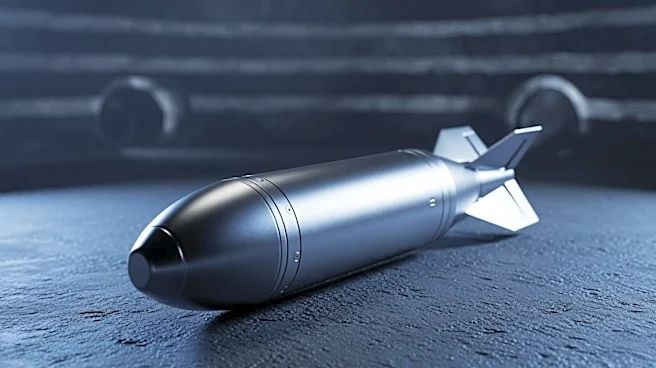
the necessity for enhanced capabilities to strike deeply buried targets. The US has previously used its largest conventional bunker-buster bombs, the GBU-57, against Iranian nuclear facilities, demonstrating the growing challenge of underground military sites. The GBU-57, weighing approximately 30,000 pounds, is designed to penetrate up to 200 feet underground. The US Air Force is working on a successor to the GBU-57, aiming for a lighter bomb capable of operating in GPS-denied environments. This development comes amid ongoing tensions with Iran, where the US has conducted operations to degrade Iran's missile and drone capabilities.
Why It's Important?
The demand for more bunker-buster bombs underscores a significant shift in military strategy as adversaries increasingly protect critical assets underground. This trend poses a challenge to US military operations, necessitating advancements in weaponry to maintain strategic superiority. The development of new bunker-buster technology could enhance the US's ability to neutralize threats in fortified locations, impacting defense strategies and military spending. The focus on underground targets reflects broader geopolitical tensions, particularly with Iran, and highlights the evolving nature of modern warfare. The ability to effectively target and destroy underground facilities is crucial for maintaining national security and deterring potential threats.
What's Next?
The US Air Force's ongoing development of a next-generation bunker-buster bomb will be closely watched, as it aims to address current limitations and enhance operational capabilities. The new bomb is expected to be lighter and more adaptable to challenging environments, such as GPS-denied areas. As tensions with Iran persist, the US may continue to refine its military strategies and capabilities to address underground threats. The outcome of these developments could influence future military engagements and defense policies, particularly in regions where adversaries employ underground tactics.