





What's Happening?
New research indicates that intercropping oats and alfalfa, particularly in equal proportions (1:1 ratio), can significantly improve animal feed quality and reduce environmental impact. A study conducted by scientists at Nottingham Trent University, the
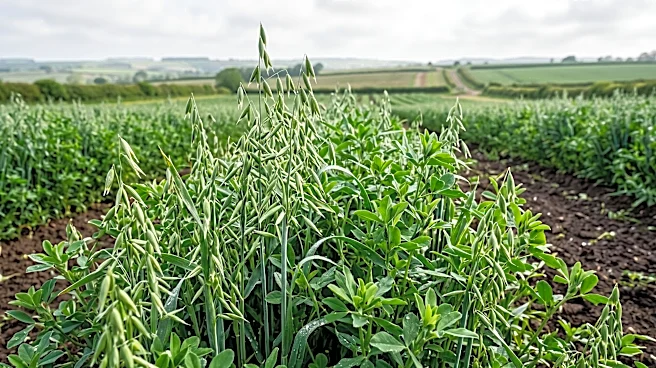
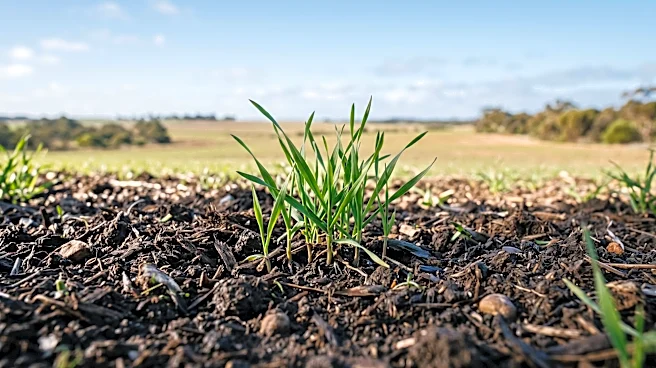
International Centre for Agricultural Research in the Dry Areas (ICARDA), and Ethiopia's Jimma University found that a 1:1 oat-alfalfa intercrop produced 21% more dry matter than oats grown alone. This intercrop also yielded a more balanced nutritional profile with higher crude protein and metabolizable energy, and reduced neutral detergent fiber. Furthermore, post-harvest soil analysis showed improvements in organic carbon, total nitrogen, available phosphorus, and cation exchange capacity. The team predicted that this intercropping method could reduce greenhouse gas emissions per unit of potential livestock weight gain by 37%–47% compared to monocultures.
Why It's Important?
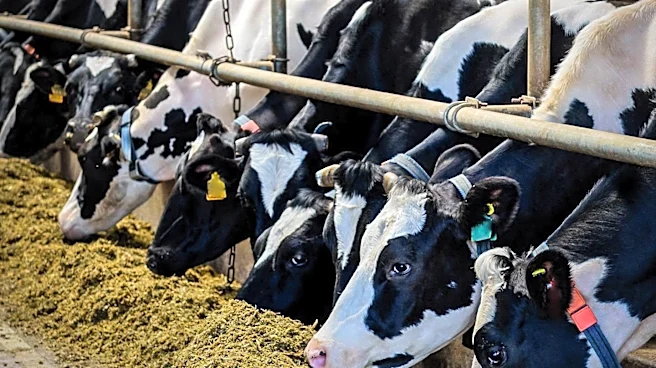
This research offers a promising sustainable livestock strategy with significant implications for the U.S. agricultural sector. Improving animal feed quality through intercropping can lead to healthier livestock and more efficient meat, dairy, and poultry production, potentially reducing the need for costly feed supplements. The environmental benefits, particularly the reduction in greenhouse gas emissions and improved soil fertility, align with growing demands for sustainable farming practices and climate-smart agriculture in the U.S. Adopting such methods could help U.S. farmers meet environmental regulations, enhance soil health, and potentially reduce reliance on synthetic fertilizers, leading to cost savings and a more resilient agricultural system. This approach could also contribute to the U.S.'s climate goals by lowering the carbon footprint of livestock farming.
What's Next?
The findings suggest that agricultural practices could shift towards more integrated crop management systems. Farmers and agricultural researchers may explore wider adoption of oat-alfalfa intercropping, especially in low-input farming systems, to enhance both feed quality and environmental outcomes. Further research might focus on optimizing intercropping ratios for different climates and soil types, as well as evaluating the economic viability and scalability of these practices for commercial farms. Extension services and agricultural organizations could play a role in disseminating this knowledge to farmers, promoting the benefits of increased plant diversity in agricultural grasslands. Policy incentives for adopting sustainable farming methods that improve soil health and reduce emissions could also encourage broader implementation.
Beyond the Headlines
The success of intercropping oats and alfalfa highlights a broader paradigm shift in agriculture towards ecological intensification, where natural processes are leveraged to enhance productivity and sustainability. This approach moves beyond conventional monoculture systems, which often rely heavily on external inputs like fertilizers and pesticides, towards more biodiverse and resilient farming models. The research underscores the interconnectedness of soil health, plant nutrition, animal feed quality, and environmental impact, offering a holistic framework for sustainable livestock production. Ethically, this method promotes a more harmonious relationship between agriculture and the environment, addressing concerns about the ecological footprint of food production. Culturally, it could foster a renewed appreciation for traditional farming wisdom that emphasized diversity and natural cycles, integrated with modern scientific understanding.