



What's Happening?
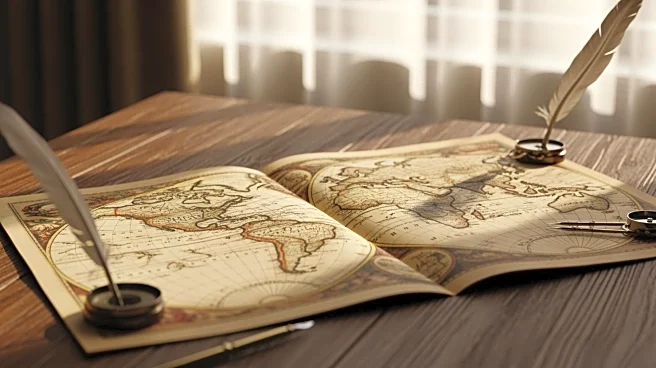
NPR's recent feature delves into the significance of physical maps in understanding human history and culture. Despite the prevalence of digital navigation tools, physical maps remain crucial for exploring historical and cultural perspectives. The report
highlights a visit to the Osher Map Library and Smith Center for Cartographic Education in Maine, which houses significant collections, including the 1662 Latin edition of Joan Blaeu's Atlas Maior. These maps serve as more than just navigational tools; they are historical documents that offer insights into how societies have perceived the world over time.
Why It's Important?
The exploration of physical maps underscores their enduring value in a digital age. While modern technology offers convenience, physical maps provide a tangible connection to the past, revealing how historical societies understood geography and their place in the world. This perspective is vital for historians, educators, and cultural scholars who seek to understand the evolution of human thought and societal development. The preservation and study of such maps can influence educational curricula and cultural heritage preservation efforts, emphasizing the importance of historical context in contemporary society.
What's Next?
The continued study and preservation of historical maps are likely to enhance educational and cultural initiatives. Institutions like the Osher Map Library may see increased interest from researchers and the public, leading to potential collaborations with educational bodies to integrate map studies into broader historical and cultural education programs. Additionally, there may be efforts to digitize these collections, making them more accessible to a global audience and fostering a deeper appreciation for historical cartography.
Beyond the Headlines
The focus on physical maps also raises questions about the preservation of digital data and the potential loss of cultural artifacts in the digital age. As society becomes increasingly reliant on technology, the risk of losing historical context and tangible cultural artifacts grows. This development highlights the need for balanced preservation strategies that safeguard both physical and digital cultural heritage, ensuring that future generations have access to comprehensive historical records.