



What's Happening?
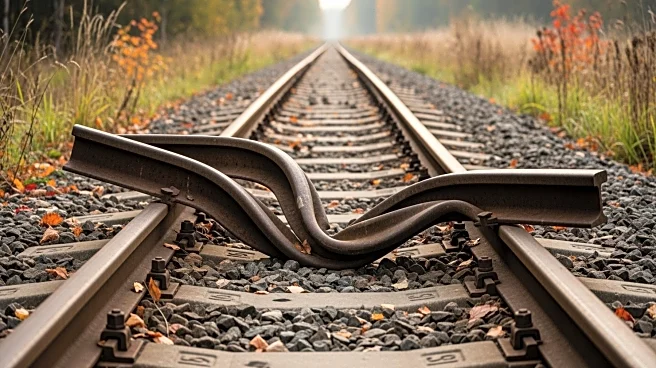
A train derailment involving 42 railcars occurred in Roseau County, Minnesota, prompting evacuations early Saturday morning. The Canadian National Railway train derailed north of Warroad at approximately 4:50 a.m. Among the derailed cars, two were classified
as 'dangerous goods,' which can include energy products, chemicals, hazardous wastes, and radioactive materials. Despite the potential risk, there were no reported leaks, injuries, or fires, and no impact on crossings. Hazardous materials teams were deployed to check for leaks and monitor air quality, but officials confirmed there were no environmental concerns. Residents who were evacuated as a precaution were able to return home the following day. Cleanup efforts are ongoing, with teams working to clear the site and repair damage, a process expected to take several weeks. The cause of the derailment is currently under investigation.
Why It's Important?
The derailment highlights the potential risks associated with transporting hazardous materials by rail, particularly in rural areas where emergency response resources may be limited. The swift response by hazardous materials teams and local authorities helped prevent any environmental or health crises, underscoring the importance of preparedness and effective communication in emergency situations. The incident also raises questions about rail safety and infrastructure, as well as the protocols in place for handling such emergencies. For the local community, the event was a reminder of the vulnerabilities associated with living near major transportation routes. The broader implications for the rail industry include potential regulatory scrutiny and the need for ongoing investment in safety measures to prevent future incidents.
What's Next?
The investigation into the cause of the derailment will be a key focus in the coming weeks. Findings could influence future safety regulations and operational practices for rail companies, particularly those transporting hazardous materials. Local authorities and Canadian National Railway will continue cleanup and repair efforts, aiming to restore normal operations as quickly as possible. The incident may also prompt discussions among policymakers and industry leaders about improving rail safety standards and emergency response protocols. Community meetings or public forums could be organized to address residents' concerns and provide updates on safety measures being implemented.