






What's Happening?
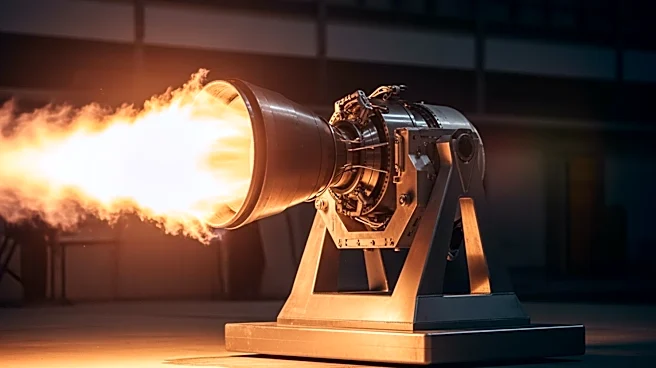
SpaceX has successfully conducted a static fire test of its Starship V3 Super Heavy rocket booster at its Starbase site in Texas. This test, which took place on May 7, 2026, involved igniting all 33 Raptor engines of the Super Heavy booster while it remained
anchored to the launch pad. This marks the first successful full-duration and full-thrust static fire test for the V3 version of the Super Heavy booster. Previous tests with fewer engines had been conducted, but this is the first time all 33 engines were tested simultaneously without issues. The Starship upper stage, known as 'Ship', has also completed a successful static fire test of its six Raptor engines. SpaceX is preparing for the 12th test flight of the Starship, which is expected to occur on May 15, 2026. This flight will be the first for the new, more powerful V3 version of the vehicle.
Why It's Important?
The successful static fire test of the Starship V3 Super Heavy rocket booster is a significant milestone for SpaceX as it continues to develop its next-generation launch vehicle. The Starship is designed to be the most powerful rocket ever built, capable of carrying over 100 tons of payload to low Earth orbit. This development is crucial for SpaceX's long-term goals of enabling human settlement on the Moon and Mars. Additionally, NASA has selected the Starship's upper stage as one of the crewed landers for its Artemis program, which aims to return humans to the Moon. The success of these tests is vital for SpaceX to meet its commitments to NASA and to advance its own space exploration ambitions. The upcoming test flight will further demonstrate the capabilities of the Starship system and its readiness for future missions.
What's Next?
Following the successful static fire test, SpaceX is targeting May 15, 2026, for the 12th test flight of the Starship. This flight will be suborbital, and if successful, it will pave the way for further testing and development. Before the Starship can be used for crewed missions, it will need to be equipped with a life-support system and demonstrate its ability to reach orbit and be refueled in space. SpaceX's progress with the Starship is being closely watched by NASA and other stakeholders, as it plays a critical role in the Artemis program. The next steps will involve further testing and validation to ensure the vehicle's safety and reliability for future missions, including potential lunar landings.