





What's Happening?
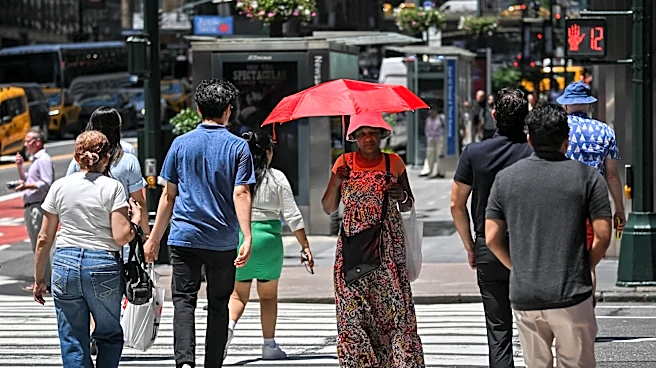
On Thursday, New York City experienced its hottest day of the year, leading to significant stress on Con Edison's power grid. The extreme heat resulted in thousands of customers losing power, while others had their power reduced as a measure to conserve
energy. The situation highlights the challenges faced by utility companies during extreme weather conditions, as they strive to maintain service and prevent widespread outages. The report by CBS News New York's Adi Guajardo underscores the impact of rising temperatures on urban infrastructure and the need for effective energy management strategies.
Why It's Important?
The strain on Con Edison's power grid during extreme heat conditions is a critical issue for urban centers like New York City. As temperatures rise, the demand for electricity increases, primarily due to the use of air conditioning systems. This can lead to power outages, affecting residents and businesses alike. The situation underscores the importance of investing in resilient energy infrastructure and developing strategies to manage peak demand. It also highlights the broader implications of climate change, as cities must adapt to more frequent and severe weather events. The ability to maintain reliable power supply is crucial for public safety, economic stability, and overall quality of life.
What's Next?
In response to the power grid strain, Con Edison and other utility companies may need to implement measures such as upgrading infrastructure, enhancing grid management technologies, and promoting energy conservation among consumers. Policymakers and city planners might also consider long-term strategies to mitigate the impact of extreme weather, including the integration of renewable energy sources and the development of smart grid technologies. Public awareness campaigns could play a role in encouraging energy-saving practices during peak demand periods. The ongoing challenge will be balancing immediate responses with sustainable solutions to ensure energy security in the face of climate change.