






What's Happening?
Healthy Debate, in an article by Anne Fortier and E. Richard Gold, highlights that combating rising antibiotic resistance requires new policies, not just new drugs. The authors argue that while scientific advancements in antibiotic development are possible,
the current pharmaceutical business model is fundamentally at odds with the prudent use of these drugs. Antibiotics are most effective when used sparingly to delay resistance, which conflicts with a sales-volume-based business model. This misalignment has led to the bankruptcy of companies like Achaogen and Melinta, despite bringing new antibiotics to market for serious drug-resistant infections. The article points out that drug resistance was directly responsible for 1.14 million deaths in 2021 and was linked to nearly five million more, with projections indicating a worsening trend. The authors advocate for 'delinked payment' models, where governments pay a fixed fee for antibiotic availability rather than per dose, aligning financial incentives with public health goals. The United Kingdom has piloted such a model since 2022, and the U.S. has proposed similar legislation with the PASTEUR Act. Additionally, the article stresses the importance of reducing antibiotic overuse in agriculture, improving infection prevention through vaccines and clean water, and preventing antibiotic residues from spreading in the environment.
Why It's Important?
The current economic model for antibiotic development in the U.S. and globally is unsustainable, leading to a critical shortage of new drugs to combat increasingly resistant bacteria. The failure of companies that develop essential new antibiotics due to misaligned financial incentives poses a direct threat to public health. If the development and availability of new antibiotics continue to decline, the U.S. healthcare system will face escalating challenges in treating common infections, potentially leading to higher mortality rates and increased healthcare costs. The proposed 'delinked payment' model, such as that in the PASTEUR Act, could revolutionize how antibiotics are funded and distributed, ensuring that life-saving drugs are available when needed without incentivizing overuse. This shift would protect the efficacy of new antibiotics for longer, safeguarding public health and reducing the economic burden of untreatable infections. Furthermore, addressing antibiotic overuse in agriculture and improving environmental controls are crucial for a comprehensive strategy, as resistance spreads across human, animal, and environmental domains, impacting food safety and public health.
What's Next?
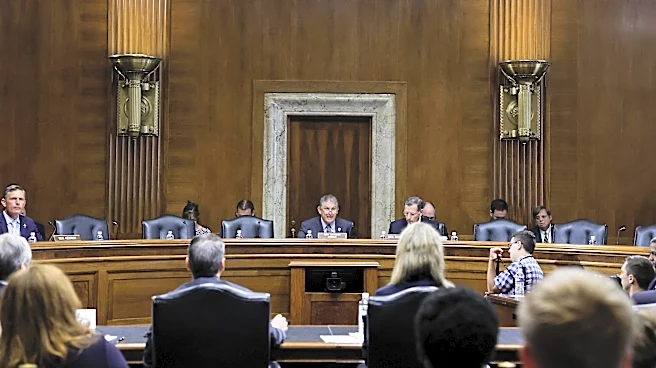
The U.S. Congress will likely continue to debate and consider legislation like the PASTEUR Act, which aims to implement delinked payment models for antibiotics. If passed, such legislation could fundamentally alter the pharmaceutical landscape for antibiotic development, encouraging investment in new drugs while promoting their responsible use. Pharmaceutical companies may need to adapt their business strategies to align with these new payment models, focusing on long-term public health outcomes rather than short-term sales volumes. Additionally, there will likely be increased pressure on agricultural sectors to reduce antibiotic use in livestock, potentially leading to new regulations or industry best practices. Public health campaigns promoting judicious antibiotic use and improved infection control measures are also expected to continue and expand. The success of pilot programs in countries like the UK will provide valuable data and insights for the U.S. as it navigates these policy changes, aiming to create a more sustainable and effective approach to combating antimicrobial resistance.
Beyond the Headlines
The core issue extends beyond mere drug development to a fundamental re-evaluation of how essential public health goods are valued and funded within a market-driven economy. The current crisis in antibiotic development highlights a systemic flaw where market forces fail to adequately support products that require restricted use for long-term efficacy. This situation raises ethical questions about the responsibility of pharmaceutical companies and governments in ensuring the availability of life-saving treatments, even when traditional profit motives are diminished. The shift towards delinked payment models represents a significant departure from conventional market mechanisms, suggesting a growing recognition that certain public goods necessitate alternative economic frameworks. This could set a precedent for other areas of medical innovation where responsible use conflicts with sales-driven models. Furthermore, the 'One Health' approach, emphasizing the interconnectedness of human, animal, and environmental health, underscores the need for holistic policy solutions that transcend traditional sectoral boundaries, fostering a more integrated and resilient public health infrastructure.