






What's Happening?
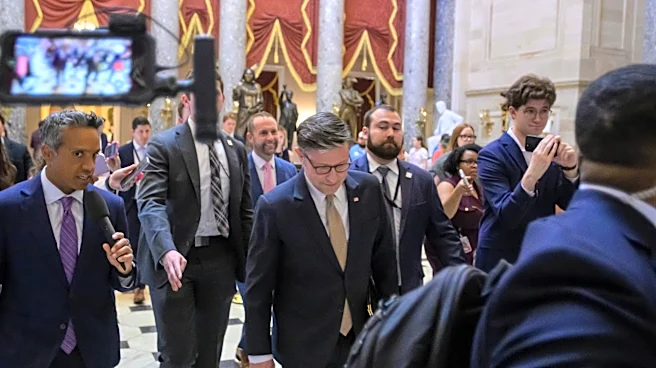
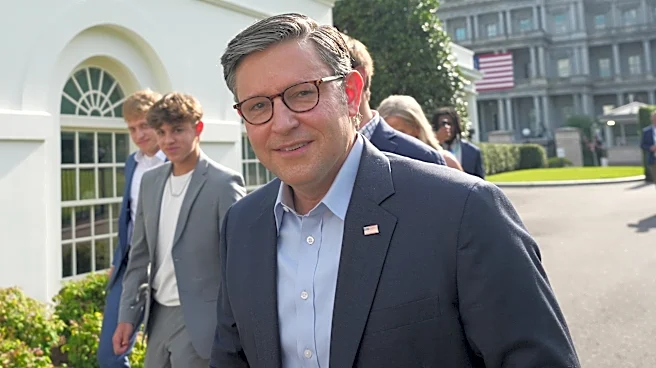
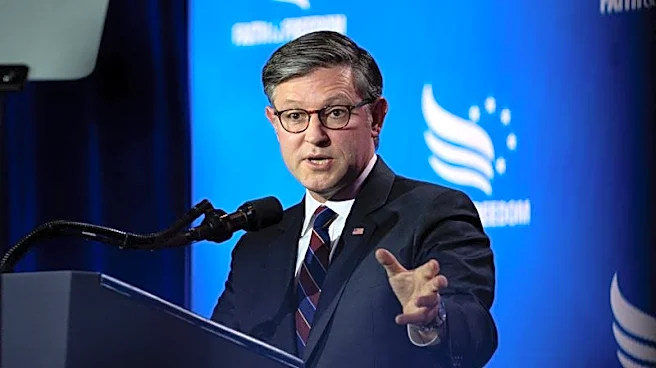
House Speaker Mike Johnson's attempt to advance President Trump's 'Save America Act' has encountered significant resistance within the Republican Party. The plan, which aimed to attach the act to a defense bill, was thwarted when more than a dozen House Republicans
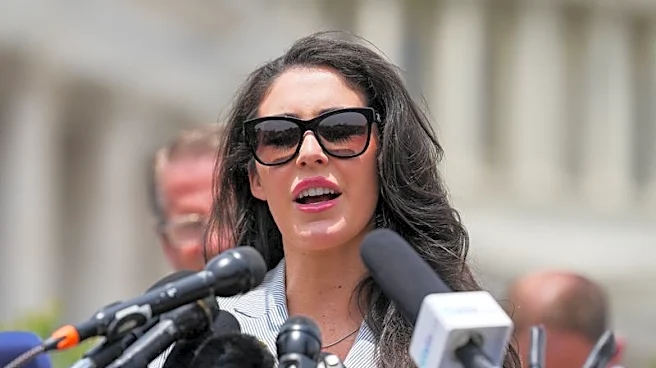
voted against it. The 'Save America Act' seeks to federalize election procedures, mandate voter roll purges, and require proof of citizenship for voter registration. Johnson's strategy to push the act through by linking it to the National Defense Authorization Act was criticized by Rep. Anna Paulina Luna, who argued for a more direct amendment approach. Despite efforts to rally support, the act faces slim chances in the Senate, where it has previously failed to secure the necessary votes to overcome a filibuster.
Why It's Important?
The failure to advance the 'Save America Act' highlights the challenges within the Republican Party in unifying around election reform measures. The act's provisions, such as federalizing election procedures and requiring voter ID, are contentious and reflect broader national debates on voting rights and election integrity. The setback also underscores the difficulties faced by House Republicans in passing significant legislation with a narrow majority. This development could impact the party's legislative agenda and campaign strategies ahead of the midterm elections, as they miss opportunities to pass bills that could energize their base.
What's Next?
With the 'Save America Act' stalled, House Republicans may need to reassess their legislative priorities and strategies. The act's failure to progress could lead to further internal debates on how to address election reform and other key issues. As the Senate remains unlikely to pass the act, Republicans may focus on alternative legislative efforts or seek to build broader consensus within the party. The upcoming midterm elections will likely influence these decisions, as the party aims to present a cohesive platform to voters.