







What's Happening?
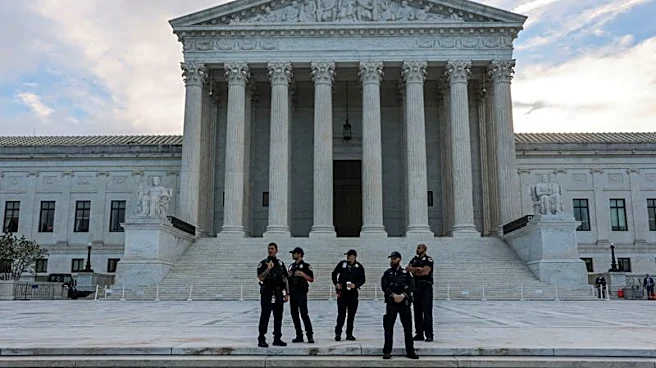
During Supreme Court oral arguments, Justice Neil Gorsuch intervened to correct Sopan Joshi, an assistant to the solicitor general representing the Department of the Air Force. The case, Department of the Air Force v. Prutehi Guahan, centers on whether
the Air Force must conduct an environmental study before applying for a permit to burn old explosives and munitions. Joshi argued that two federal statutes, the Resource Conservation and Recovery Act (RCRA) and the National Environmental Policy Act (NEPA), are inconsistent, with RCRA displacing NEPA's environmental analysis requirements. Justice Gorsuch interrupted Joshi, clarifying that he had not used the term 'inconsistent' but rather emphasized the Court's usual approach: if compliance with both of Congress's commands is possible, then both should be followed to avoid conflict. This exchange highlighted a key point of contention regarding the interpretation of federal environmental laws and their application to military activities.
Why It's Important?
Justice Gorsuch's correction underscores a fundamental principle of statutory interpretation within the U.S. legal system: the presumption that Congress intends for all its laws to be given effect, and that courts should reconcile statutes rather than find them in conflict whenever possible. This principle is critical for maintaining the coherence and integrity of federal law. In the context of environmental regulations, the Court's stance on reconciling NEPA and RCRA could significantly impact how federal agencies, particularly the military, conduct operations that have environmental implications. A ruling that mandates compliance with both statutes could lead to more thorough environmental reviews for federal projects, potentially increasing costs and timelines but also enhancing environmental protection. Conversely, a decision that allows one statute to displace another could create loopholes for environmental oversight, affecting public health and natural resources.
What's Next?
The Supreme Court's decision in Department of the Air Force v. Prutehi Guahan will provide crucial guidance on how federal agencies must navigate overlapping environmental regulations. The outcome will clarify whether the Air Force, and by extension other federal entities, can bypass NEPA's environmental study requirements when operating under RCRA permits. This ruling will likely influence future litigation involving environmental groups and federal agencies, potentially leading to either more stringent environmental compliance demands or a more permissive regulatory environment for federal projects. The Court's interpretation will also be closely watched by legal scholars and environmental policy advocates, as it will shape the future application of key environmental protection laws.
Beyond the Headlines
The exchange between Justice Gorsuch and the Department of Justice lawyer reveals the intricate challenges of legal interpretation, especially when federal agencies seek to balance operational efficiency with environmental responsibilities. The case touches upon the broader tension between national security interests and environmental protection, a recurring theme in U.S. policy. The Court's emphasis on reconciling congressional commands reflects a judicial philosophy that seeks to uphold the legislative intent behind all statutes, rather than allowing agencies to choose which laws to prioritize. This philosophical approach has implications beyond environmental law, influencing how courts interpret and apply various federal regulations across different sectors, ensuring a more holistic and integrated application of the law.