



What's Happening?
Health officials and entomologists in Massachusetts are raising concerns about the spread of Asian needle ants, an invasive species known for its painful sting. According to USA Today, a colony of these ants has been identified in Waltham, Massachusetts,
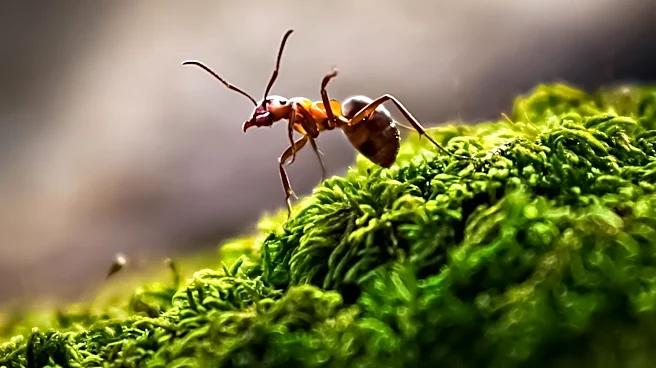
adding the state to the list of New England locations affected by this species. Other colonies have been reported in Providence, Rhode Island, and heavily invaded forests in Georgia. The ants are small, about 0.2 inches long, and can be difficult to identify due to their resemblance to other species. They are glossy and dark brown to black, with orange-brown antennae and back legs. The sting of the Asian needle ant can cause a throbbing, stinging sensation lasting over 30 minutes, with potential for severe allergic reactions, including anaphylaxis. Their venom may carry a higher risk of allergic reaction than a honey bee sting.
Why It's Important?
The spread of Asian needle ants poses a threat to local ecosystems by displacing native ant species, which are crucial for seed dispersal and forest regeneration. This disruption can affect the resilience of forests and their ability to recover from environmental changes. The ants' presence is often overlooked due to their nesting habits, which do not include obvious mounds like other ant species. This makes infestations difficult to detect until they are widespread. The species has been reported in several states, including Massachusetts, Rhode Island, Connecticut, New York, Pennsylvania, and as far west as Washington. Awareness and prevention are currently the most effective strategies to manage their spread, as eliminating established colonies is extremely challenging.
What's Next?
Experts emphasize the importance of prevention and awareness to control the spread of Asian needle ants. People are advised to be cautious when moving landscaping materials, as the ants often nest in mulch, potted plants, wood chips, leaf litter, railroad ties, and rotting logs. Health officials and entomologists will likely continue monitoring the spread of these ants and work on strategies to mitigate their impact on local ecosystems. Public education campaigns may be initiated to inform residents about identifying and preventing infestations.