



What's Happening?
A methane gas eruption occurred at the Chiquita Canyon landfill in Castaic, north of Los Angeles, on Monday, leading to the hospitalization of six workers and prompting evacuation warnings for nearby residents. The incident took place around 4 p.m. when
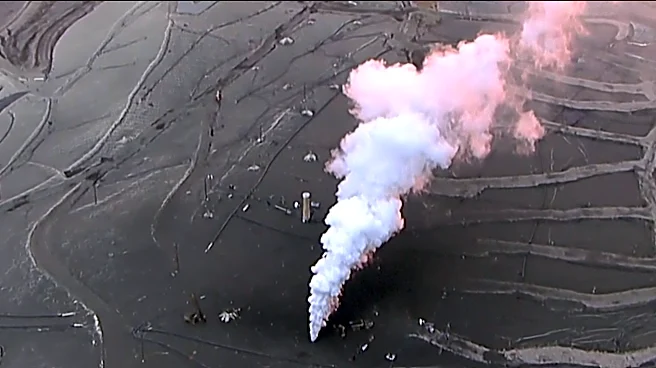
work crews conducting a routine drilling operation struck a pocket of methane gas 150 feet underground. This disturbance resulted in a 500-foot geyser of rotting trash and a large plume of black smoke, accompanied by a noxious smell visible for miles. Captain Aaron Katon, a fire department spokesperson, clarified that the event was not an explosion or fire, but rather gas escaping and carrying decomposing garbage into the air. Hazardous materials crews decontaminated the six workers who were then taken to the hospital as a precaution. Residents in Val Verde, Hasley Hills, Industry, Cambridge, and Hillcrest districts were advised to stay indoors and prepare for potential evacuation. Los Angeles County health officials have ordered Waste Connections and Chiquita Canyon to provide immediate assistance to affected residents, including hotel stays, air purifiers, and transportation, due to potential health impacts from the odors.
Why It's Important?
This incident highlights significant environmental and public health concerns associated with landfill operations, particularly in densely populated areas. The release of methane gas, a potent greenhouse gas, contributes to climate change, while the accompanying particulate matter and noxious odors pose immediate health risks such as headaches, nausea, dizziness, and respiratory irritation for nearby communities. The event underscores the challenges of managing waste and the potential for unforeseen hazards even during routine operations. For Waste Connections and Chiquita Canyon, this incident adds to a history of complaints regarding foul odors and environmental concerns, potentially leading to increased scrutiny from regulatory bodies and further legal action. The directive from Los Angeles County health officials for the landfill operators to provide immediate aid to residents sets a precedent for corporate responsibility in environmental emergencies, emphasizing the financial and reputational costs of such incidents. The community's long-standing burden from the landfill, as noted by County Supervisor Kathryn Barger, suggests a broader issue of environmental justice and the impact of industrial facilities on local populations.
What's Next?
Following the capping of the leak by 11 p.m. on Monday and the lifting of all evacuation orders, hazardous materials teams remained on site overnight to monitor air quality. County Supervisor Kathryn Barger has demanded a full explanation from the operator and responsible agencies regarding the cause of the incident and any failed safeguards, vowing accountability. This suggests potential investigations and enforcement actions by county and state authorities. Given the existing lawsuit filed by California Attorney General Rob Bonta and the Department of Toxic Substances Control against Waste Connections and other landfill operators for alleged failures in handling contaminated liquids, this methane eruption could intensify legal pressures and lead to additional regulatory orders. The U.S. Environmental Protection Agency had already ordered the landfill to implement further air control and treatment measures, and this event may prompt a review of the effectiveness and enforcement of those measures. Residents will likely continue to monitor the situation closely and may advocate for stricter oversight and more robust safety protocols at the landfill.
Beyond the Headlines
The methane eruption at Chiquita Canyon landfill points to deeper systemic issues within waste management infrastructure and environmental regulation. The repeated complaints from residents and prior legal actions suggest a pattern of environmental non-compliance or inadequate oversight that extends beyond this single incident. The event raises questions about the long-term sustainability of current landfill practices, especially as urban areas expand closer to such facilities. Ethically, it highlights the responsibility of corporations to prioritize community safety and environmental protection over operational costs, and the role of regulatory bodies in ensuring compliance. Legally, the ongoing lawsuit and potential new investigations could set precedents for how environmental damages and corporate accountability are handled in similar situations. Culturally, such incidents can erode public trust in both corporations and government oversight, fostering community activism and demands for greater transparency and environmental justice. This event may also spur broader discussions on alternative waste management strategies, such as increased recycling, composting, and waste-to-energy initiatives, to reduce reliance on landfills and mitigate their environmental impact.