
What's Happening?
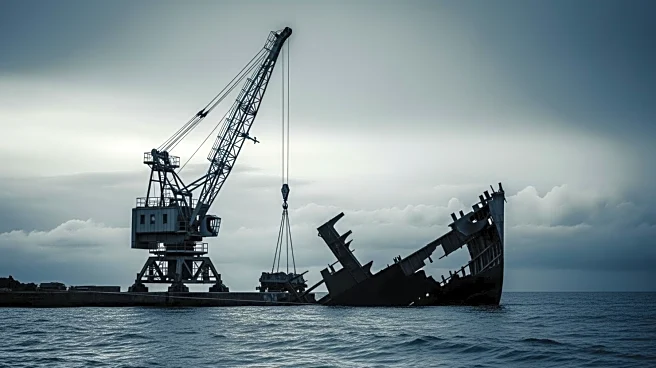
Nearly a year after the MSC containership MSC Baltic III lost power and grounded in Newfoundland, Canada, salvage companies are now bidding to remove the damaged vessel. The ship, which went aground on February
15, 2025, was carrying 471 containers and approximately 1,700 tonnes of fuel. The Canadian Coast Guard has been monitoring the situation, emphasizing that MSC is responsible for the removal under Canadian law. The first phase of the operation, managed by T&T Marine Salvage, focused on stabilizing the vessel and removing contaminants. However, recent storms have caused further damage, complicating the removal process. The insurance company, ABL Group, has closed the bidding for the removal project, with a contract expected to be awarded soon. The removal work is anticipated to begin in the spring, with proposals considering whether to remove the vessel from shore or water.
Why It's Important?
The removal of the MSC Baltic III is crucial to prevent further environmental damage and ensure maritime safety in the region. The ship's grounding and subsequent damage have posed significant environmental risks, including potential fuel leaks and container spills. The involvement of the Qalipu First Nation highlights the cultural and environmental sensitivity of the operation, as the wreck is located on their ancestral territories. The successful removal of the vessel will mitigate these risks and restore the affected area. Additionally, the operation underscores the importance of robust maritime regulations and the responsibilities of shipping companies in managing such incidents.
What's Next?
The Canadian Coast Guard will continue to monitor the MSC Baltic III as the removal process progresses. Once a contract is awarded, the chosen salvage company will prepare for the complex task of removing the vessel, which may involve innovative techniques due to the ship's condition and location. Stakeholders, including environmental groups and local communities, will likely keep a close watch on the operation to ensure compliance with environmental standards. The outcome of this project could influence future policies on maritime salvage operations and environmental protection.