





What's Happening?
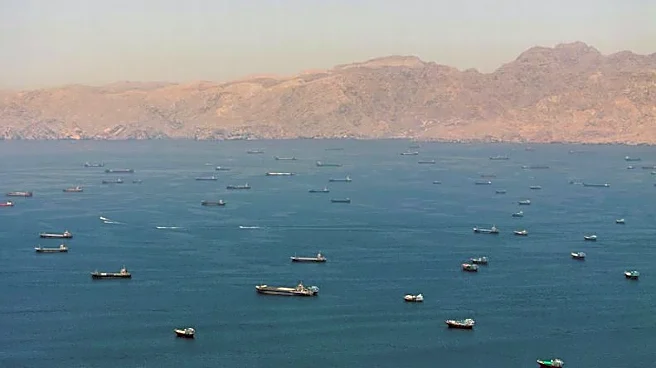
Iranian officials are emphasizing control over the Strait of Hormuz as a strategic necessity and a core element of deterrence against the United States and Israel. Supreme Leader Adviser Ali Akbar Velayati described the strait as Iran's 'ultimate leverage'
and a 'real guarantee' for the survival of any U.S.-Iran agreement. This stance is part of Iran's broader effort to institutionalize control over the waterway, contradicting U.S. demands for freedom of navigation. Iranian media circulated a draft U.S.-Iran agreement suggesting Iran would manage maritime traffic jointly with Oman, barring military vessels from the strait. The U.S. rejected this proposal as fabricated, but it highlights Iran's continued push for recognition of its sovereignty over the strait. Iran has used naval mines and attacks on commercial vessels to enforce its control, charging fees for passage through its traffic separation scheme.
Why It's Important?
Iran's control over the Strait of Hormuz poses significant challenges to international shipping and energy markets, potentially undermining U.S. interests in the region. The strait is a critical chokepoint for global oil supplies, and Iran's actions could set a dangerous precedent for freedom of navigation in international waterways. The U.S. insists on maintaining open passage through the strait, emphasizing its importance for global trade and energy security. Iran's strategy reflects its attempt to leverage perceived military successes into long-term political gains, potentially destabilizing the region further. The situation underscores the complexities of U.S.-Iran relations and the broader geopolitical dynamics in the Middle East.
What's Next?
The ongoing negotiations between the U.S. and Iran are likely to continue, with both sides holding firm on key issues such as Iran's nuclear program and sanctions relief. The U.S. is unlikely to concede control over the strait, maintaining its stance on freedom of navigation. Iran's insistence on economic concessions and recognition of its control over the strait will remain contentious points. The potential for renewed conflict looms if diplomatic efforts fail to address these core disagreements. The international community will closely monitor developments, given the strait's significance to global energy supplies.