





What's Happening?
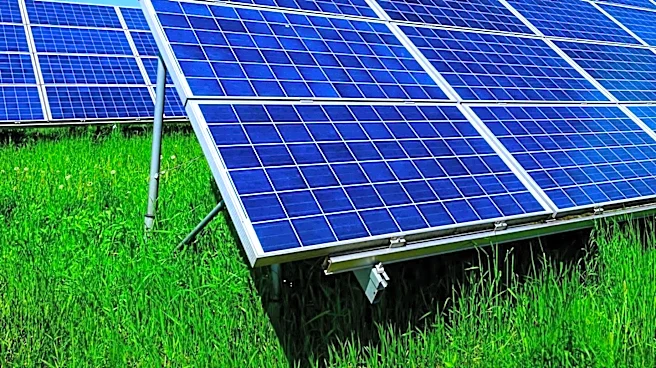
Cuban leader Miguel Díaz-Canel met with an Italian delegation in Havana on Thursday night to express gratitude for their 'Energy for Life' campaign, which raised approximately $400,000 to install photovoltaic solar panels across Cuba. The initiative,
launched in mid-2024 by various Italian organizations including the Italian Cultural Recreational Association (ARCI), has funded solar panel installations in food industry facilities, agriculture, health centers, and cultural institutions, primarily in the eastern part of the country. Díaz-Canel acknowledged the positive impact of these installations, citing the Casa de la Cultura in El Cobre, Santiago de Cuba, as a beneficiary. This donation comes as Cuba faces a severe energy crisis, marked by frequent nationwide blackouts and daily deficits exceeding 2,000 megawatts. The Cuban electrical system is struggling with fuel shortages, an outdated fleet of thermoelectric plants, decades of underinvestment, and poor government management. In addition to the Italian aid, Cuba has recently received 5,000 solar systems from China and 45 kits from the Argentine Movement of Solidarity with Cuba (MASC).
Why It's Important?
This international solidarity effort highlights the severe humanitarian and economic challenges Cuba is currently facing due to its energy crisis, exacerbated by U.S. sanctions and an aging infrastructure. The donations of solar panels, while significant, underscore the depth of the problem, as they have yet to reverse the collapse of the Cuban electrical system. The reliance on foreign aid for basic energy infrastructure demonstrates the vulnerability of Cuba's economy and its dependence on international support. For the U.S., this situation presents a complex foreign policy challenge. While the U.S. maintains an economic blockade, other nations are actively providing aid, potentially undermining U.S. efforts to pressure the Cuban government. The energy crisis directly impacts the Cuban population, leading to widespread blackouts that affect essential services like hospitals and food production. This could fuel internal discontent and potentially lead to further instability, which could have broader regional implications. The Cuban government, in turn, uses these international donations to showcase solidarity and to counter U.S. narratives of isolation, while simultaneously blaming the U.S. for its economic woes.
What's Next?
Cuba will likely continue to seek international aid and partnerships to address its ongoing energy crisis. The recent shipment of 5,000 solar panels from China, along with the Italian donations, indicates a strategy to increase renewable energy capacity. However, the effectiveness of these efforts will depend on overcoming challenges such as the lack of batteries for energy storage and the persistent issues with its outdated thermoelectric plants. The Cuban government has a stated goal of reaching over 1,500 MW of photovoltaic capacity by the end of the year and aims to make Havana's water pumping independent with solar energy in the coming months. Despite these efforts, the scale of the crisis suggests that a complete resolution will require substantial long-term investment and systemic changes. The U.S. is expected to maintain its economic pressure, potentially leading to further diplomatic friction. The ongoing energy shortages will continue to impact the daily lives of Cubans, potentially leading to social unrest or increased migration pressures.
Beyond the Headlines
The energy crisis in Cuba, and the international response to it, reveal deeper geopolitical currents and the complex interplay of humanitarian concerns, economic sanctions, and ideological divides. The donations from Italy and China, while framed as humanitarian aid, also serve as expressions of international solidarity that challenge the U.S. policy of isolation. This highlights a broader global trend where countries are increasingly seeking alternative alliances and support systems outside the traditional Western sphere of influence. The crisis also underscores the urgent need for sustainable energy solutions in developing nations, particularly those facing economic hardship and geopolitical pressures. The Cuban government's focus on solar energy, despite its current limitations, represents a strategic shift towards renewable sources, which could have long-term environmental and economic benefits if fully realized. However, the immediate challenges of an outdated grid and the lack of storage capacity mean that the path to energy independence and stability will be arduous, with significant implications for the well-being of the Cuban population and the country's future development.