






What's Happening?
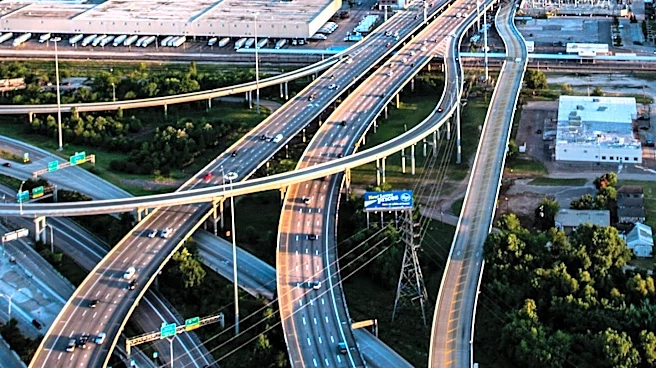
Houston's Katy Freeway, expanded to 26 lanes at a cost of nearly $3 billion, has not alleviated traffic congestion as intended. The expansion, completed in 2008, initially reduced travel times, but by 2014, peak-hour commutes had increased by up to 51%.
The phenomenon of 'induced demand' is cited as a key factor, where increased road capacity leads to more driving, negating the benefits of the expansion. This case exemplifies the challenges urban planners face in addressing traffic congestion through infrastructure expansion.
Why It's Important?
The situation in Houston serves as a cautionary tale for urban planners and policymakers. It highlights the limitations of traditional approaches to traffic management and the need for alternative solutions. The concept of induced demand suggests that simply expanding road capacity is not a sustainable solution to congestion. This has implications for future infrastructure projects and urban planning strategies, emphasizing the need for integrated transportation solutions that include public transit and demand management.
What's Next?
Despite the lessons from the Katy Freeway, Texas is proceeding with another major highway expansion project, the North Houston Highway Improvement Project, estimated to cost $13 billion. This raises questions about the effectiveness of such investments and the potential for repeating past mistakes. Urban planners and policymakers may need to explore more innovative and sustainable approaches to transportation planning, such as enhancing public transit systems and implementing congestion pricing.