




What's Happening?
Donnie Peek, a property owner in Fortson, Georgia, claims that a multibillion-dollar gas pipeline project, the Southern System Expansion 4, was rerouted to avoid land owned by Chris Lane, a longtime Southern Co. employee, while simultaneously expanding
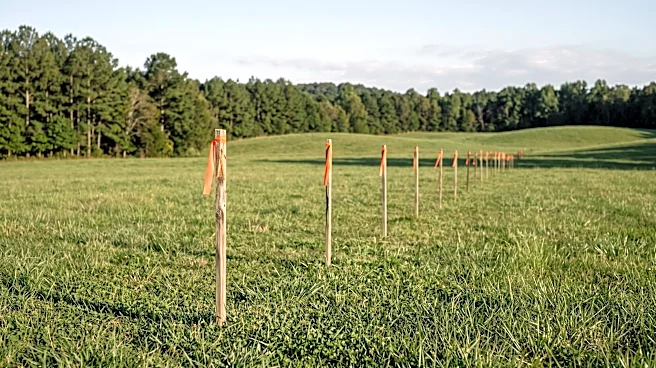
the easement across Peek's own property. Initially, Peek had no objections to Southern Natural Gas's proposal for a new gas line in 2024, as a pipeline already crossed his land, making a new one in the same corridor seem logical. However, the final alignment released by the company moved the segment off existing easements on several neighboring parcels and redrew it to run exclusively through Peek's property. Peek alleges that this revision suspiciously bypassed Lane's land, who manages Plants Addison and Franklin for Southern Co. Southern Natural Gas, a joint venture between Kinder Morgan and Southern Co., denies any special treatment, stating the revised route affects one landowner instead of four and 'best balances overall landowner impacts with the project's operational needs.'
Why It's Important?
This dispute highlights potential ethical concerns and transparency issues within large infrastructure projects, particularly regarding land acquisition and eminent domain. The allegation that a pipeline route was altered to benefit an employee of a parent company raises questions about fairness, corporate influence, and the equitable treatment of private landowners. Such incidents can erode public trust in utility companies and regulatory bodies responsible for overseeing these projects. The project itself, the Southern System Expansion 4, is crucial for providing 'critical reliability to the Southeastern grid,' linking gas supply basins in Texas with Florida, South Carolina, and Tennessee. It aims to meet the increasing electricity demand driven by the Southeast's data center boom, with utilities like Georgia Power relying more on gas-fired generation. If the reroute indeed adds significant costs and environmental impact, as Peek suggests, it could lead to higher costs for gas customers and unnecessary environmental damage, impacting both economic stakeholders and the environment.
What's Next?
Despite the overall pipeline project having received final approval, Donnie Peek has formally requested the Federal Energy Regulatory Commission (FERC) to rehear his case. This indicates a continued legal and regulatory challenge to the pipeline's current route. Southern Natural Gas had previously rejected Peek's request to revert to the original route, citing potential impacts on more landowners. The company offered Peek $300,000 for additional easement rights, which he claims was offered in full to him if he agreed to keep the line entirely on his property, after he was unable to secure agreement from two neighboring landowners for a shared payment. The revelation that Chris Lane, the Southern Co. employee, had also proposed alternative routes to Kinder Morgan, further complicates the situation and may be a key point in Peek's appeal to FERC. The outcome of FERC's review will determine whether the pipeline route is reconsidered or if the current alignment proceeds as planned.
Beyond the Headlines
The controversy surrounding the pipeline reroute delves into deeper issues of corporate accountability and the power dynamics between large corporations and individual citizens. The perception of preferential treatment for an insider, regardless of the company's official denial, can fuel public skepticism about the integrity of infrastructure development processes. This case could set a precedent for how regulatory bodies scrutinize route selections for future projects, potentially leading to more stringent oversight and transparency requirements. It also brings to light the environmental implications of such projects, as Peek's affidavit argues that the original route would have minimized tree destruction. The balance between energy infrastructure needs, environmental protection, and property rights is a recurring challenge in the U.S., and this incident underscores the ongoing tension. The outcome could influence future legal challenges by landowners against large utility projects, emphasizing the importance of clear, unbiased decision-making in infrastructure planning.