




What's Happening?
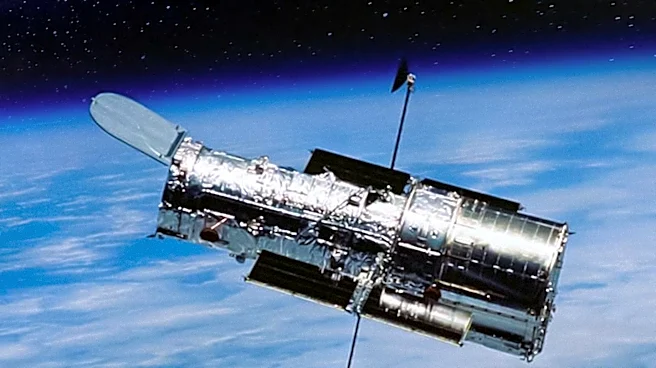
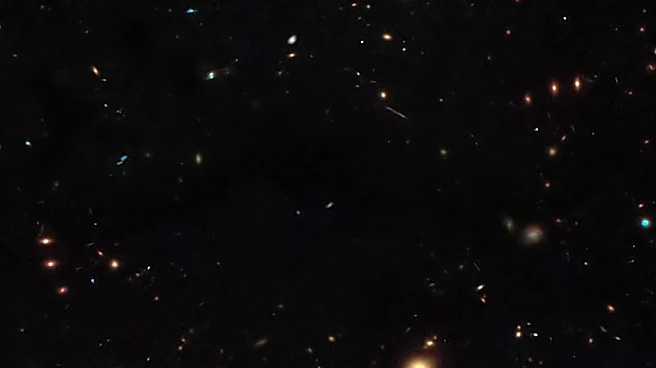
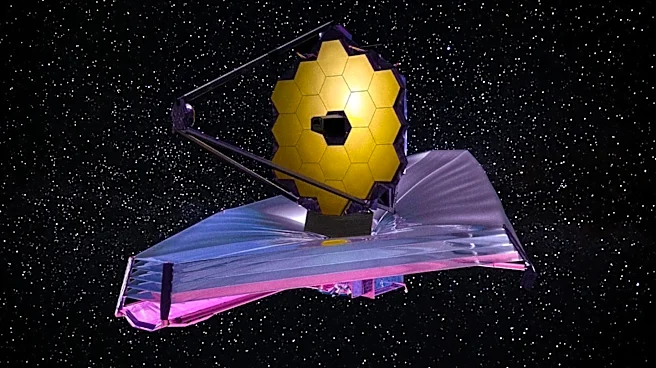
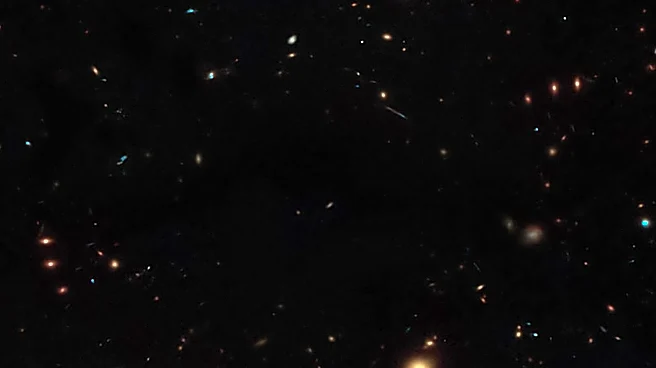
Astronomers utilizing the James Webb Space Telescope (JWST) have detected a mysterious signal emanating from a seemingly empty patch of space in the southern constellation of Fornax. This region is well-documented, having been observed by the Hubble Space Telescope for
over 270 hours to create its Ultra Deep Field (HUDF), which contains nearly 10,000 galaxies. The JWST, with its more sensitive infrared capabilities, turned its mirrors to this same area and, in a tiny corner, detected a strange signal twice, with observations nearly three months apart. The anomaly is a single, bright emission line at about 1.6 micrometers in the near-infrared spectrum. The perplexing aspect is the isolation of this signal; there were no other accompanying emission lines, and prior observations from both JWST and Hubble showed nothing in that specific patch of space. The research, led by astrophysicist Mason Huberty of the University of Minnesota, was published in The Astrophysical Journal. The team used a novel technique called Multiobject Coronagraphy for Slitless Spectroscopy (MOCSS) to search for faint, distant objects.
Why It's Important?
This mysterious signal is significant because it challenges current astronomical understanding and detection methods. The fact that a bright emission line appeared in two separate observations, 88 days apart and from different angles, yet was absent in all prior, extensive observations, suggests an unknown phenomenon. It could indicate extreme physical conditions or a transient event that is not easily explained by existing models of celestial objects. The inability to definitively identify the source—whether it's a distant galaxy, a supernova, or a black hole tearing apart a star—highlights gaps in our knowledge of cosmic events and the universe's composition. This discovery could lead to new theories about the behavior of matter and energy in space, potentially revealing previously unobserved types of cosmic phenomena or requiring a re-evaluation of how astronomers interpret spectral data. The implications extend to the capabilities and limitations of advanced telescopes like JWST, pushing the boundaries of what can be detected and understood in the cosmos.
What's Next?
The researchers emphasize that follow-up observations are essential to confirm the redshift and determine the physical origin of the emission. Deeper and more sensitive spectroscopy will be required to potentially reveal additional emission lines, which could definitively establish the redshift and nature of the source. Astronomers will likely dedicate more observation time with the JWST and possibly other advanced telescopes to this specific region of space. The scientific community will be focused on replicating these findings and gathering more data to either identify the source or rule out potential explanations. This ongoing investigation could lead to new discoveries about transient astronomical events, the early universe, or even exotic phenomena not yet theorized. The process will involve careful analysis of spectral data and potentially the development of new analytical techniques to interpret such isolated signals.
Beyond the Headlines
The detection of this mysterious signal touches upon the fundamental human quest to understand the universe and our place within it. It underscores the vastness of the unknown in space and the continuous evolution of scientific inquiry. Ethically, it reinforces the importance of rigorous scientific methodology, as the researchers meticulously ruled out glitches and artifacts. Culturally, such discoveries often spark public imagination, reminding us of the wonders and mysteries beyond Earth. Long-term, if this signal points to a new class of astronomical objects or events, it could fundamentally alter cosmological models and our understanding of stellar evolution, galaxy formation, or even the nature of dark matter or energy. It highlights that even in well-studied areas of the cosmos, unexpected phenomena can emerge, pushing the boundaries of scientific knowledge and inspiring future generations of astronomers and physicists.