

What's Happening?
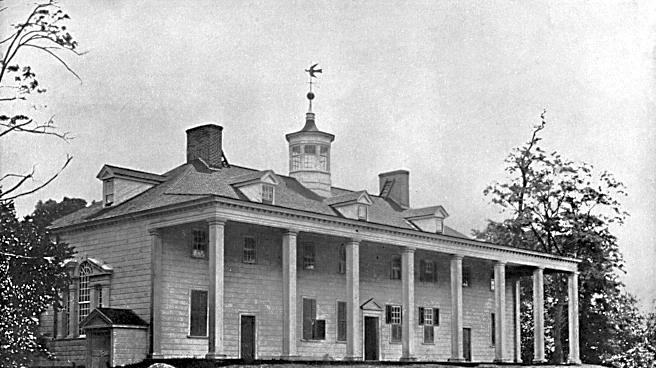
Mount Vernon, the historic estate of George Washington, is highlighting the innovative agricultural practices implemented by the first U.S. president. Washington's approach to farming included a seven-year crop rotation system that integrated over 60
different crops and livestock management. He constructed a flour mill and a distillery on the estate, and his operations were supported by a large enslaved workforce. The estate's location along the Potomac River allowed for a lucrative fishing business, which significantly contributed to its operating costs. The Mount Vernon Ladies' Association, established in 1853, continues to preserve the estate, which includes original buildings and gardens. Recent archaeological discoveries at the site have provided further insights into Washington's agricultural practices.
Why It's Important?
The preservation and study of Mount Vernon offer valuable insights into early American agricultural practices and the economic strategies of one of the nation's founding figures. Washington's methods reflect a blend of innovation and reliance on enslaved labor, highlighting the complexities of his legacy. The estate serves as a historical resource, educating the public about 18th-century farming techniques and the socio-economic conditions of the time. The ongoing preservation efforts underscore the importance of maintaining historical sites for educational and cultural enrichment. Additionally, the estate's management by a private organization rather than the government illustrates a unique model of historical preservation.
What's Next?
Mount Vernon continues to offer educational programs and demonstrations of Washington's farming techniques, providing visitors with a deeper understanding of historical agricultural practices. The estate's preservation efforts are ongoing, with parts of the mansion undergoing renovation to maintain its historical integrity. Future archaeological work may uncover more artifacts that could further illuminate the daily lives of those who lived and worked on the estate. The Mount Vernon Ladies' Association remains committed to preserving the site and expanding its educational outreach.
Beyond the Headlines
The story of Mount Vernon also raises important discussions about the role of slavery in the economic success of early American estates. Washington's evolving views on slavery, as reflected in his private correspondence, add a layer of complexity to his legacy. The estate's history provides a platform for dialogue about the moral and ethical considerations of historical figures and their impact on contemporary society. The juxtaposition of Washington's innovative farming practices with his reliance on enslaved labor highlights the contradictions inherent in the nation's founding.