







What's Happening?
South African health authorities have identified the Andes strain of hantavirus in two passengers from a cruise ship experiencing an outbreak of the rare infection. The virus, which can be transmitted from person to person, is typically spread by rodents.
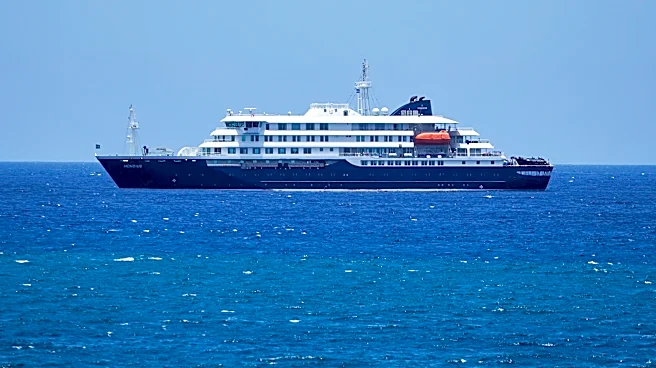
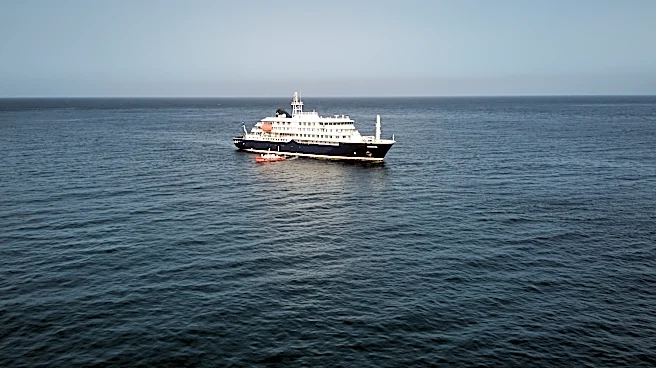
The World Health Organization notes that the Andes virus is primarily found in South America, particularly in Argentina and Chile. The outbreak has resulted in three deaths and several illnesses among passengers. One British passenger is in intensive care in a South African hospital, while another passenger was tested posthumously after dying in South Africa. The cruise ship is currently anchored off Cape Verde, with plans to evacuate remaining sick passengers.
Why It's Important?
The identification of the Andes strain of hantavirus in a cruise ship outbreak raises significant public health concerns, particularly regarding the potential for person-to-person transmission. The situation underscores the importance of monitoring and controlling infectious diseases in global travel settings. The outbreak highlights the need for robust health protocols and rapid response measures to prevent the spread of rare and potentially deadly viruses. The incident may prompt health authorities to review and strengthen guidelines for managing infectious disease outbreaks on cruise ships and other travel environments.
What's Next?
Health authorities are likely to continue monitoring the situation closely and may implement additional measures to contain the outbreak and prevent further transmission. The World Health Organization and other international health bodies may issue updated guidelines and recommendations for managing hantavirus outbreaks. The cruise industry may face increased scrutiny and pressure to enhance health and safety protocols to protect passengers and crew. Ongoing investigations into the outbreak's origins and transmission dynamics will be crucial for informing future public health strategies.