








What's Happening?
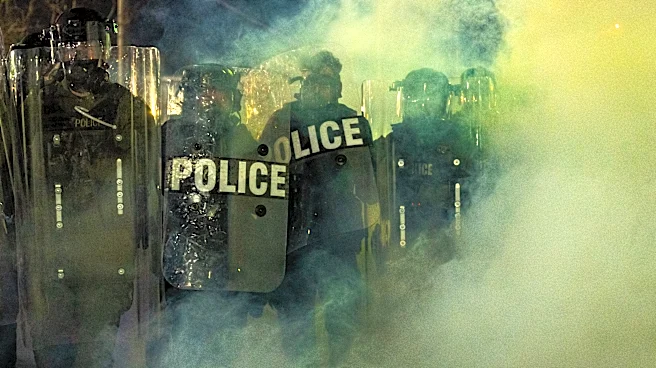
Tensions have escalated outside the Delaney Hall immigration detention center in Newark, New Jersey, following the decision by Mayor Ras Baraka to reduce local law enforcement presence. This decision has led to a series of confrontations between protesters
and law enforcement. On Friday, protesters were seen attacking cars belonging to employees of the GEO Group, the private company operating Delaney Hall. Four individuals were arrested, including a man from Seattle who was caught damaging a vehicle. Homeland Security Secretary Markwayne Mullin emphasized that assaults on law enforcement would be prosecuted. The situation intensified on Saturday when ICE agents used pepper ball guns and spray to disperse protesters blocking facility access. The mayor's decision has divided Newark residents, with some supporting the reduction of police resources at the privately-owned facility, while others argue for a stronger local police presence.
Why It's Important?
The situation at Delaney Hall highlights the ongoing national debate over immigration enforcement and the role of local versus federal authorities. Mayor Baraka's decision reflects a broader trend of local governments reassessing their involvement in federal immigration operations, especially in the context of budget constraints and community relations. The protests and subsequent arrests underscore the tensions between community activists and federal immigration policies. This incident could influence public opinion and policy decisions regarding the allocation of local resources to support federal immigration enforcement. The division among Newark residents also illustrates the complex dynamics of local governance and community priorities, potentially impacting future electoral and policy outcomes in the city.
What's Next?
The future of law enforcement presence at Delaney Hall remains uncertain. Mayor Baraka's office has not indicated whether recent events will alter the city's approach. Continued protests and potential legal actions could prompt further responses from both local and federal authorities. The situation may also lead to increased scrutiny of private detention facilities and their operations. Community leaders and activists are likely to continue advocating for changes in immigration enforcement practices, potentially influencing broader policy discussions at the state and national levels.