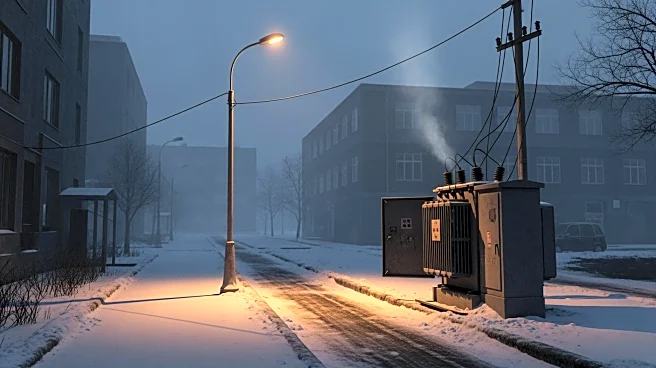

What's Happening?
In Berlin, Germany, a significant power outage has affected approximately 45,000 homes and 2,220 businesses, with only 7,000 households and 150 businesses having their electricity restored so far. The
outage, which occurred in the district of Steglitz-Zehlendorf, is suspected to be the result of arson. A fire at a cable link over the Teltow Canal is being investigated by police after a letter claiming responsibility was sent to authorities. The incident has left many homes without heating during a period of very cold winter weather. Emergency services have been transferring residents from care homes and medical facilities in the affected area. Authorities, including Berlin's Senator for Economic Affairs, believe the fire was a malicious act, although no group has been identified as the perpetrator.
Why It's Important?
The power outage in Berlin highlights the vulnerability of critical infrastructure to acts of sabotage, particularly during extreme weather conditions. The incident has significant implications for public safety, as it affects essential services such as heating and medical care. The suspected arson attack underscores the need for enhanced security measures and surveillance to protect infrastructure. The situation also raises concerns about the potential for similar attacks in other regions, which could disrupt services and endanger lives. The response from authorities and the ongoing investigation will be crucial in preventing future incidents and ensuring the safety of residents.
What's Next?
Authorities in Berlin are continuing their investigation into the suspected arson attack, examining the authenticity of the letter claiming responsibility. The restoration of power to the remaining affected households and businesses is expected to take several days. In response to the incident, there may be increased calls for improved surveillance and security measures to protect critical infrastructure. The debate over the use of video surveillance in public spaces is likely to intensify, with some advocating for its preventive benefits despite privacy concerns. The outcome of the investigation and the measures implemented could set a precedent for how similar threats are addressed in the future.