






What's Happening?
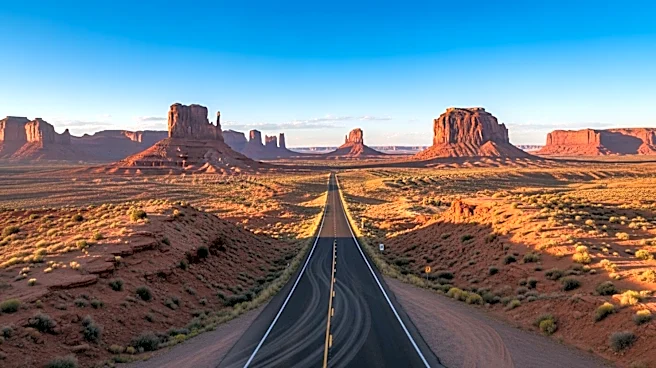
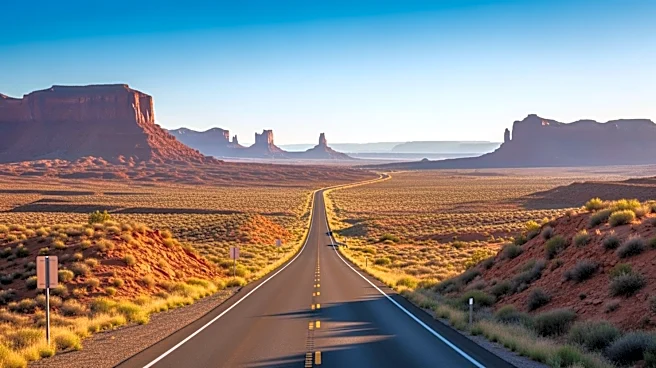
Monument Valley is being highlighted as a significant detour for travelers planning to explore Route 66 during its 100-year anniversary in 2026. Known for its iconic red rock formations, Monument Valley offers a unique blend of visual appeal and cultural
significance, particularly within the Navajo Nation. As the centennial approaches, tourism professionals are encouraging travelers to consider destinations like Monument Valley that provide both scenic beauty and cultural depth. Guided tours led by Navajo guides offer visitors access to areas not open to the general public, providing insights into the traditions and stories tied to the land. This approach aims to enrich the traditional Route 66 experience by incorporating broader regional narratives.
Why It's Important?
The inclusion of Monument Valley in Route 66 centennial plans underscores a shift in travel preferences towards experiences that combine iconic scenery with cultural understanding. This trend reflects a growing interest in destinations that offer more than just visual appeal, emphasizing the importance of cultural heritage and storytelling in tourism. For the Navajo Nation, this increased attention could lead to economic benefits through tourism, while also promoting cultural preservation and education. The centennial celebration is expected to influence travel patterns, drawing diverse groups of travelers to the Southwest, thereby boosting local economies and fostering a deeper appreciation for the region's cultural landscapes.
What's Next?
As the centennial approaches, travelers are advised to plan ahead, particularly for guided tours within Navajo Nation lands, as demand is expected to rise. Tourism planners are focusing on creating itineraries that incorporate Monument Valley as a flexible stop, allowing visitors to experience the region's cultural and scenic offerings. Seasonal considerations, such as avoiding peak summer heat, will play a role in travel planning. The centennial is likely to spark further discussions about the importance of integrating cultural narratives into travel experiences, potentially influencing future tourism strategies in the region.