
What's Happening?
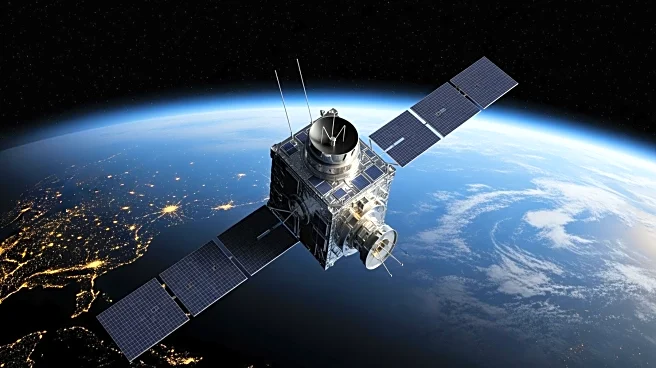
NASA's Terra satellite, launched on December 19, 1999, is approaching the end of its mission after nearly 26 years in orbit. Originally designed for a six-year mission, Terra has significantly outlasted
its expected lifespan, providing invaluable data on Earth's atmosphere, land, and oceans. The satellite was part of NASA's Earth Observing System (EOS) and carried five key instruments: ASTER, CERES, MOPITT, MISR, and MODIS. These instruments have contributed to a wide range of scientific research, from climate change to atmospheric pollution. As Terra's orbit begins to drift and its instruments are gradually shut down, the satellite is being prepared for retirement. The mission has been instrumental in advancing the understanding of Earth's systems and has produced a wealth of data that continues to support scientific research worldwide.
Why It's Important?
The Terra satellite has been a cornerstone of Earth observation, providing critical data that has enhanced the understanding of climate change, atmospheric conditions, and environmental processes. Its long-term data sets have been crucial for climate modeling and have informed policy decisions related to environmental management and climate change mitigation. The satellite's instruments have allowed scientists to monitor global phenomena such as deforestation, urbanization, and natural disasters, contributing to a better understanding of human impact on the planet. As Terra nears the end of its mission, the scientific community faces the challenge of filling the gap left by its retirement, emphasizing the need for continued investment in Earth observation technologies.
What's Next?
As Terra's mission concludes, NASA is focusing on the development and deployment of new satellites to continue Earth observation. The data collected by Terra will remain a valuable resource for researchers, and efforts are underway to ensure that future missions build on its legacy. The transition to new technologies and satellites will be critical in maintaining the continuity of Earth observation data, which is essential for ongoing climate research and environmental monitoring. The scientific community is also exploring ways to integrate Terra's data with newer datasets to enhance the understanding of long-term environmental changes.
Beyond the Headlines
Terra's retirement marks a significant moment in the history of Earth observation, highlighting the evolution of satellite technology and its impact on scientific research. The mission's success underscores the importance of international collaboration in space exploration, as Terra's instruments were developed with contributions from the United States, Japan, and Canada. The satellite's data has not only advanced scientific knowledge but also supported practical applications in areas such as agriculture, disaster response, and urban planning. As the mission concludes, it serves as a reminder of the critical role that space-based observations play in addressing global challenges.