



What's Happening?
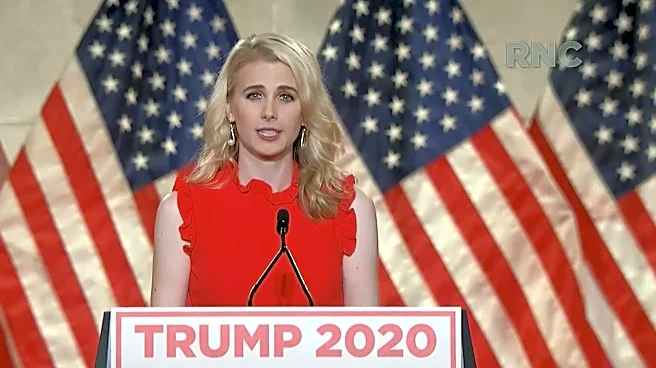
Natalie Harp, a 35-year-old West Wing aide, has emerged as a central figure in President Trump's inner circle, drawing public and political attention. Described as a principal gatekeeper to the President, Harp's role became widely discussed after she
accompanied President Trump in a meal container during an emergency evacuation from Turkey due to an Iranian threat. Senator Jon Ossoff, a Democrat from Georgia, subsequently criticized President Trump, stating he prefers to 'build his party room and travel with Natalie' instead of focusing on his duties. This comment sparked a strong defense of Harp from various Trump allies, including White House aides, Capitol Hill lawmakers, conservative influencers, and cabinet members. President Trump himself deflected questions about Ossoff's remarks, though a government-managed social media account attacked the CNN reporter who posed the question. Harp, who earns a taxpayer-funded salary of $150,000, holds the dual titles of special assistant and executive assistant to the President. She is known for her unwavering loyalty and for providing President Trump with unfiltered information, including content from social media, and is nicknamed 'the human printer' for carrying a portable printer to deliver information to him.
Why It's Important?
The prominence of Natalie Harp highlights the unique dynamics within President Trump's administration and his approach to leadership. Her role as a close confidante, who reportedly provides him with information from less conventional sources, suggests a reliance on a narrow circle of trust. This dynamic can influence policy decisions and public messaging, as the information President Trump receives and acts upon may be curated through this specific lens. The strong defense of Harp by Trump's allies underscores the deep loyalty expected and cultivated within his political sphere, and the swift backlash against any perceived criticism of his inner circle. Furthermore, Harp's personal narrative of attributing her survival from bone cancer to legislation signed by President Trump in 2018, which granted access to experimental treatments, illustrates the personal connections and narratives that often intertwine with political loyalty in this administration. This personal allegiance, combined with her access, positions her as a significant, albeit often behind-the-scenes, influencer.
What's Next?
The increased public and political scrutiny on Natalie Harp is likely to continue, especially given her close proximity to President Trump and the ongoing political landscape. As the 2024 campaign progresses, her role in shaping President Trump's public image and providing him with information could become a more frequent point of discussion. The reactions from political figures like Senator Ossoff indicate that Harp may be used by opponents to criticize President Trump's leadership style and priorities. Conversely, her supporters within the Trump movement will likely continue to champion her loyalty and dedication. Future interactions between President Trump and the media, or public statements from his campaign, may offer further insights into the extent of Harp's influence and her specific responsibilities. Her continued presence and the nature of her duties will remain a subject of interest for those observing the inner workings of President Trump's political operations.
Beyond the Headlines
Natalie Harp's story delves into the less obvious aspects of political influence and loyalty within high-stakes environments. Her role as a 'human printer' and a source of unfiltered social media content raises questions about the information ecosystem surrounding powerful figures and the potential for echo chambers. The ethical implications of a senior aide providing information that some of President Trump's other advisors deem 'toxic and counterproductive' are significant, as it can impact the quality and objectivity of decision-making at the highest levels of government. Her unwavering devotion, exemplified by her running alongside President Trump's golf cart and her deeply personal connection to his policies, highlights the emotional and personal dimensions that can drive political allegiance. This dynamic can create a highly personalized form of governance, where personal trust and loyalty may sometimes supersede traditional bureaucratic structures or diverse expert opinions. The public's fascination with Harp also reflects a broader interest in the personal lives and motivations of those closest to power, offering a glimpse into the human element behind political machinery.