

What's Happening?
Morton County, North Dakota, remains under a total burn ban, a reminder issued by the Mandan Rural Fire Department after a landowner's weed-burning activity led to an uncontrolled fire on Sunday. The incident occurred around 1:15 p.m. near Mandan, where
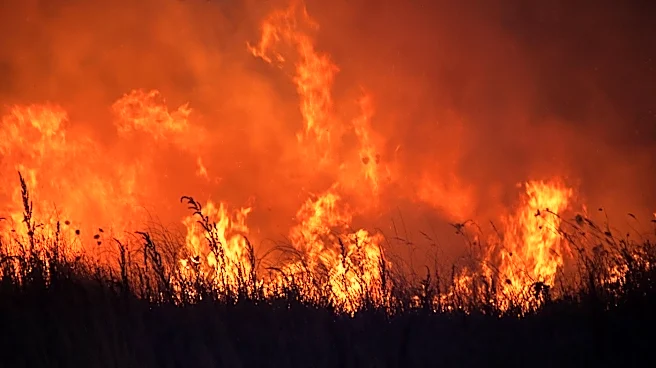
a landowner, unaware of the ban, started burning weeds. Despite recent rains, the fire quickly spread across approximately three acres before being extinguished by the landowner and neighbors. Fire Chief Lynn Gustin emphasized that even with two inches of rain in the area west of Mandan last week, the grass remains dry from the spring and will not regenerate quickly. The landowner now faces potential penalties of up to 30 days in jail and a fine of up to $1,500 for violating the burn ban.
Why It's Important?
The continued burn ban in Morton County, despite recent rainfall, highlights the persistent drought conditions and elevated fire risk in many parts of the U.S. This situation has significant implications for public safety, property protection, and natural resource management. For residents, it means restrictions on common outdoor activities, impacting agricultural practices, recreational burning, and potentially increasing the risk of accidental fires. The potential legal consequences for the landowner serve as a stark warning about the importance of adhering to local fire regulations. Economically, uncontrolled fires can lead to substantial property damage, agricultural losses, and strain on emergency services, diverting resources from other community needs. The prolonged dry conditions also affect ecosystems, increasing the vulnerability of forests and grasslands to wildfires.
What's Next?
Fire Chief Lynn Gustin stated that the burn ban will remain in effect until significant rainfall and cooler temperatures are sustained, indicating that the area is prone to fires until at least September or October. Morton County residents are urged to strictly adhere to the burn ban and refrain from starting any fires. Authorities will likely continue to monitor weather conditions and vegetation dryness to determine when it is safe to lift the ban. Educational campaigns may be reinforced to ensure public awareness of fire risks and regulations. Law enforcement will continue to enforce the burn ban, and individuals found in violation could face legal repercussions, as demonstrated by the current case. The long-term outlook depends on weather patterns and the effectiveness of fire prevention efforts.
Beyond the Headlines
This incident underscores a broader challenge faced by communities in regions experiencing prolonged drought and increased fire risk due to climate patterns. The disconnect between perceived safety after rain and the actual flammability of dried vegetation is a critical public education issue. It also highlights the tension between traditional land management practices, such as burning, and evolving environmental conditions. The incident could lead to discussions about more effective communication strategies for burn bans and the need for residents to actively seek information on local regulations. Furthermore, it points to the cumulative impact of small, seemingly innocuous actions that can escalate into significant public safety concerns, emphasizing collective responsibility in fire prevention.