







What's Happening?
A Michigan-based dermatologist and spokesperson for The Skin Cancer Foundation, James Ulery, M.D., is highlighting the significant and often overlooked risk of skin cancer for individuals who work outdoors. Dr. Ulery points out that outdoor workers, such
as farmers, agricultural workers, and construction crews, can accumulate 40 to over 80 hours of UV exposure per week, a stark contrast to the 10 to 20 hours typically experienced by indoor workers. This cumulative exposure is a major factor in the development of skin cancer, as UV radiation damages DNA in skin cells over time. He stresses that sunburn is not merely a temporary discomfort but a visible indicator of UV-induced injury and DNA damage, which can lead to mutations and increased skin cancer risk. The World Health Organization and International Labour Organization estimate that 1.6 billion working-age people globally are exposed to solar UV radiation through their jobs, with occupational exposure linked to a 60% higher risk of nonmelanoma skin cancer.
Why It's Important?
This emphasis on occupational sun exposure is crucial for public health and workplace safety in the U.S. Many outdoor workers may not perceive sun protection as a daily work safety issue, leading to chronic, unprotected exposure. The long-term health implications, particularly the increased risk of skin cancer, can result in significant healthcare costs and reduced quality of life for affected individuals. For employers, recognizing sun protection as a workplace safety concern could lead to the implementation of new policies and provisions, such as offering protective clothing, encouraging shade breaks, and providing sunscreen. This shift could mitigate legal liabilities and improve employee well-being and productivity. Furthermore, increased awareness could drive innovation in sun-protective gear and mineral-based sunscreens that are more suitable for strenuous outdoor work, benefiting both consumers and the personal care industry.
What's Next?
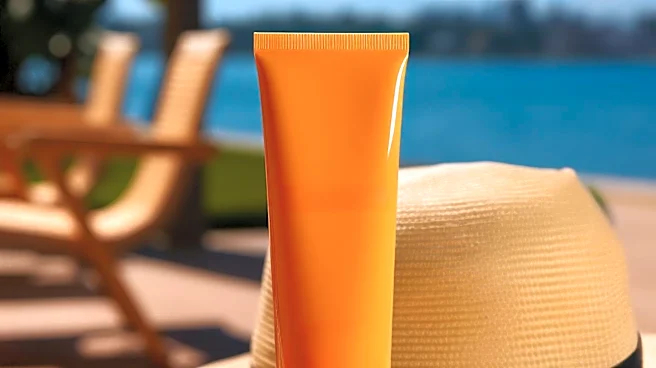
Dr. Ulery advises that even for those with substantial past sun damage, it is never too late to adopt sun-safe habits to reduce future risks. He recommends a multi-faceted approach including covering exposed skin with densely woven or UPF 50 rated clothing, wearing wide-brimmed hats and UV-blocking sunglasses, seeking shade, and consistently using broad-spectrum, water-resistant sunscreen with an SPF of 50 or higher. For outdoor workers, he suggests applying sunscreen before shifts, keeping it accessible for reapplication during breaks, and prioritizing covering skin. This guidance suggests a future where sun protection becomes an integral part of occupational health and safety protocols, potentially leading to more widespread educational campaigns and employer-sponsored initiatives to protect outdoor workers from harmful UV radiation.
Beyond the Headlines
The discussion extends beyond individual responsibility to highlight a systemic issue within occupational safety. Historically, workplace safety has focused on immediate physical hazards, but the long-term, insidious effects of environmental exposures like UV radiation have often been downplayed. This renewed focus could prompt a re-evaluation of occupational health standards to include comprehensive sun protection strategies, similar to how other environmental hazards are managed. It also raises ethical considerations for employers regarding their duty of care to protect workers from preventable health risks. Culturally, it challenges the perception that a tan is a sign of health or hard work, instead framing prolonged sun exposure as a serious health threat. This shift could lead to broader societal changes in how outdoor activities and professions are viewed and protected, fostering a culture of proactive sun safety.