




What's Happening?
The British Armed Forces have suspended military exercises involving 90 or more personnel due to budget constraints within the Ministry of Defense. Units have been instructed to cease collective training immediately, unless they are preparing for active
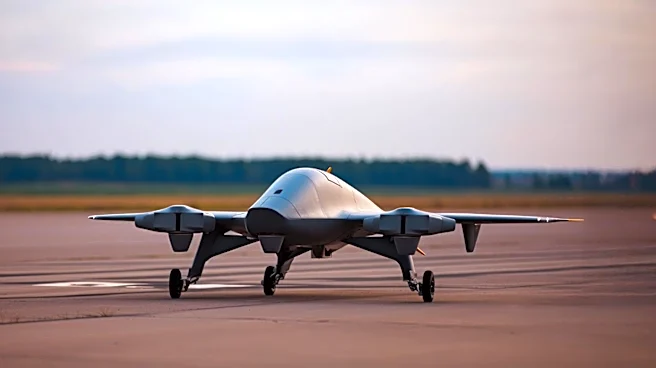
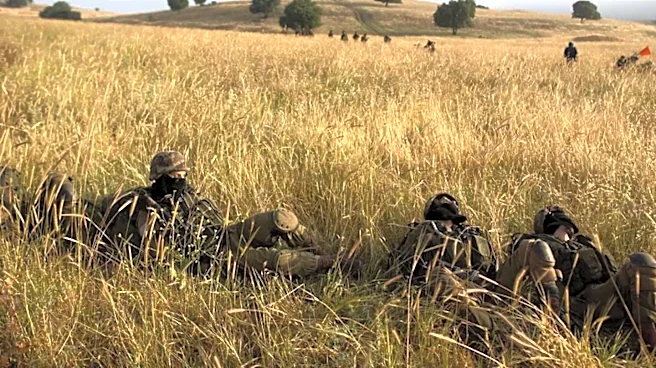
deployment. This directive significantly reduces company-level and battle group training, impacting major events such as a six-week exercise with tanks and attack helicopters in Wales. While small squad training for basic skills like vehicle operation, physical fitness, weapons handling, and drone usage will continue, the Royal Navy and Royal Air Force are also scaling back training activities. The cuts are attributed to a shortage of funds for current operating expenses, with an allocated £2 billion for training not becoming available until 2027. This financial imbalance is partly due to costly rearmament programs, including nuclear submarines and a sixth-generation fighter jet. The Ministry of Defense is now prioritizing a strategy focused on low-cost systems, redirecting approximately $6.7 billion towards a broad drone transformation and establishing Europe's largest drone testing center.
Why It's Important?
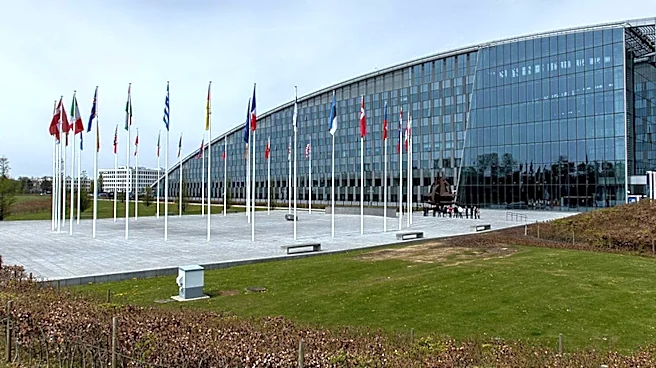
This decision by the UK Ministry of Defense has significant implications for U.S. defense strategy and international alliances. The reduction in large-scale military exercises could impact the interoperability and readiness of NATO forces, including those of the U.S., during joint operations. A less prepared British military could place a greater burden on other NATO members, potentially requiring the U.S. to increase its own contributions to collective defense. The shift towards a drone-centric strategy, while innovative, also presents a new paradigm for military engagement. For the U.S., this could mean a re-evaluation of its own investment in traditional warfare assets versus advanced, low-cost systems. It also highlights the financial pressures faced by allied nations, which could influence future defense spending and collaborative projects. The emphasis on drone technology and testing centers in the UK could also lead to new opportunities for technological collaboration and shared development with U.S. defense contractors.
What's Next?
The British Armed Forces will continue to focus on small squad training and the development of drone capabilities. The £2 billion allocated for training will become available in 2027, potentially allowing for a resumption of larger exercises in the future. The UK's commitment to building Dreadnought-class nuclear submarines, developing a sixth-generation fighter jet, and constructing Type 26 frigates will proceed, albeit with ongoing financial scrutiny. The establishment of Europe's largest drone testing center and a dedicated task force indicates a long-term strategic shift towards unmanned systems. This could lead to increased collaboration with U.S. defense entities in drone technology and counter-drone measures. The impact on NATO's collective training schedule and the potential for other member states to adjust their defense spending in response to similar financial pressures will be closely monitored.
Beyond the Headlines
This strategic pivot by the UK underscores a broader global trend in military modernization, where nations are increasingly balancing traditional defense capabilities with emerging, cost-effective technologies. The emphasis on drones reflects a recognition of their effectiveness in modern conflicts, as demonstrated by recent events. However, this shift also raises ethical and strategic questions about the future of warfare, including the role of autonomous weapons and the potential for reduced human involvement in combat. For the U.S., this development could accelerate its own re-evaluation of defense spending priorities, potentially leading to a greater investment in AI-driven and unmanned systems. It also highlights the challenges of maintaining a robust defense posture amidst economic constraints, forcing difficult choices between legacy systems and innovative solutions. The long-term implications could include a transformation of military doctrines and a redefinition of what constitutes a powerful and effective fighting force.